On Heraldry & Social Class in Early D&D - Part 1
Rodney Hampton
- 5 minutes read - 1064 wordsIs this the flavor that’s missing from your old school game?
I can still remember it. I was sitting in my assigned seat in the front row of my junior high English class. On the table in front of me is one of those scholastic-style magazines with pulpy paper. There’s an advertisement that leaps off the page at me.
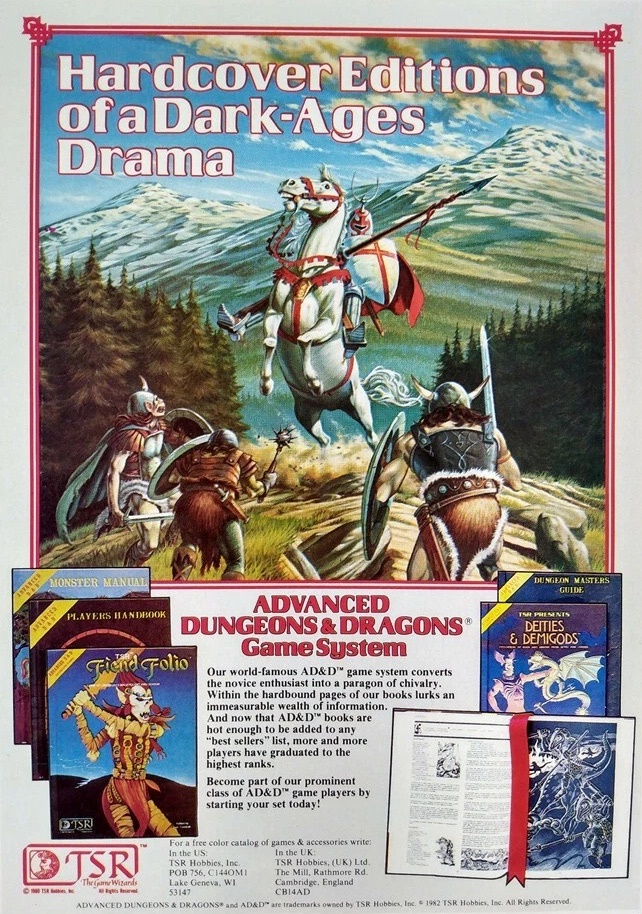
(This ad appeared in Dragon Magazine in March 1983 as well as many other publications. It was originally the artwork on the cover of Dragon #62 June 1982)
The horse and rider were striking. And, although the heraldry on the shield was simple (and the crest of the helm hardly notable) it did stick with me. This is exactly the point of heraldry and the color coordinated accoutrement. Together, they fingerprint an individual on the battlefield. If you knew the markings, you knew the man.
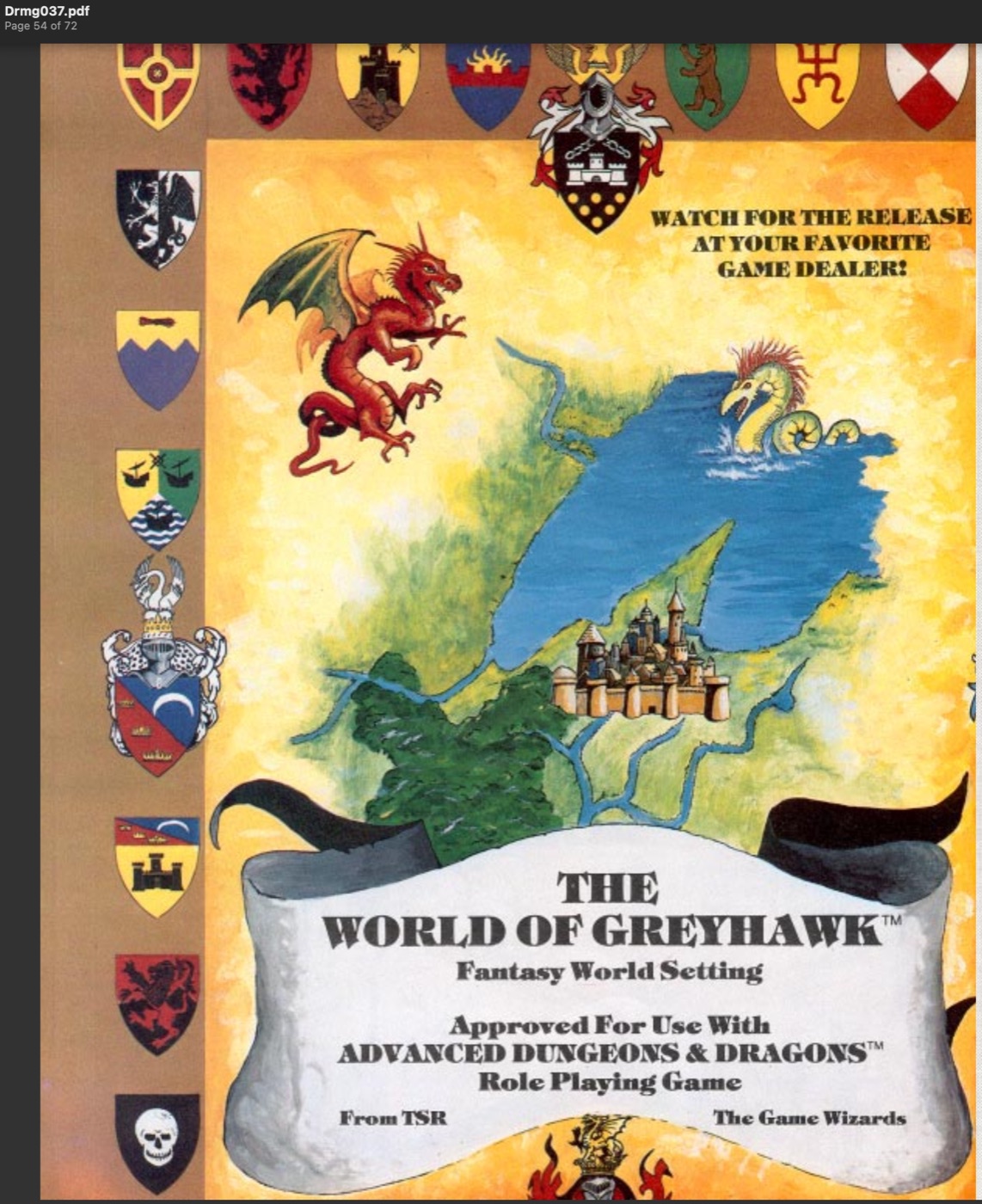
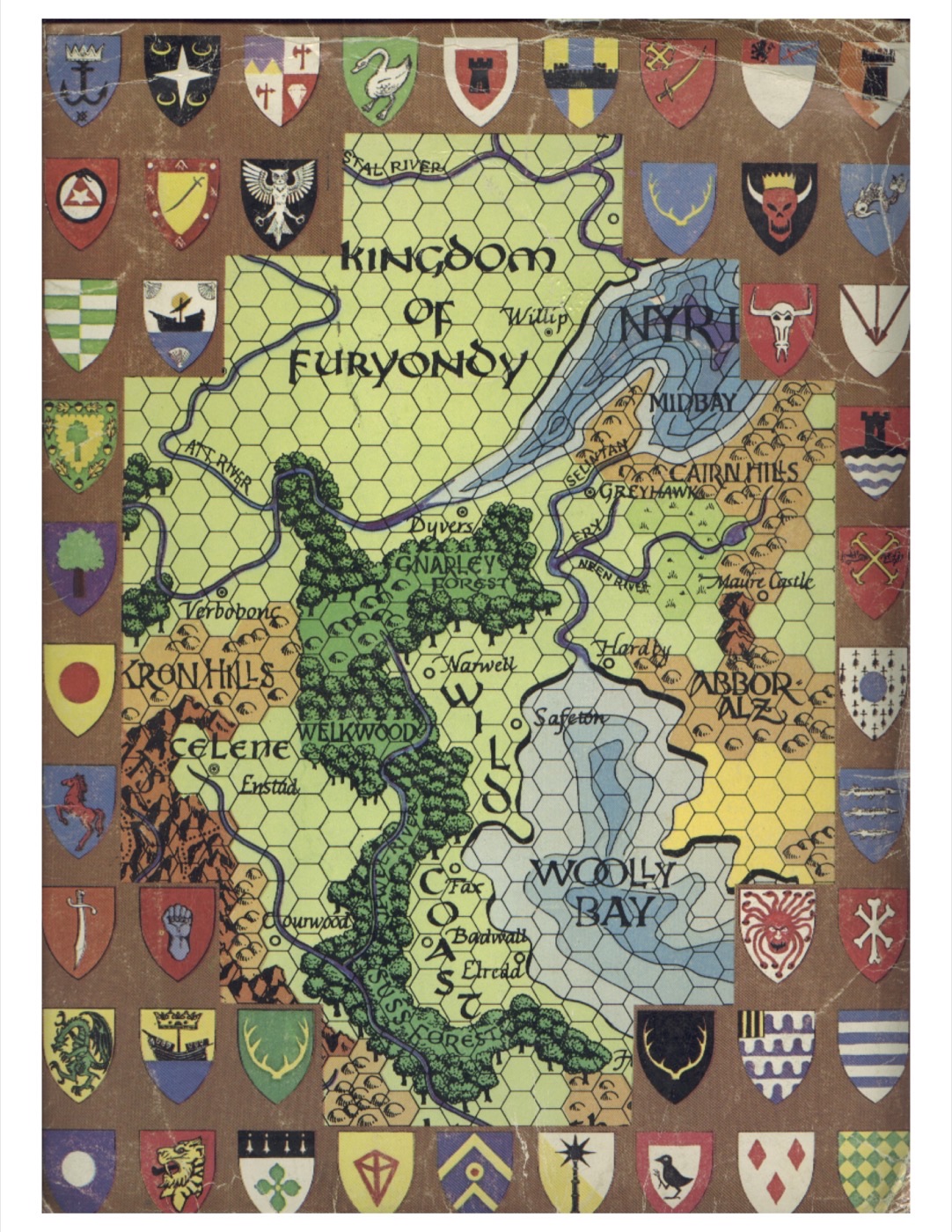
This is not the first instance of heraldry appearing in D&D’s history. Take, for example, this early advertisement for the World of Greyhawk boxed set from Dragon #37, May 1980. We see crests (an eagle, a swan, and a dragon) and numerous devices.
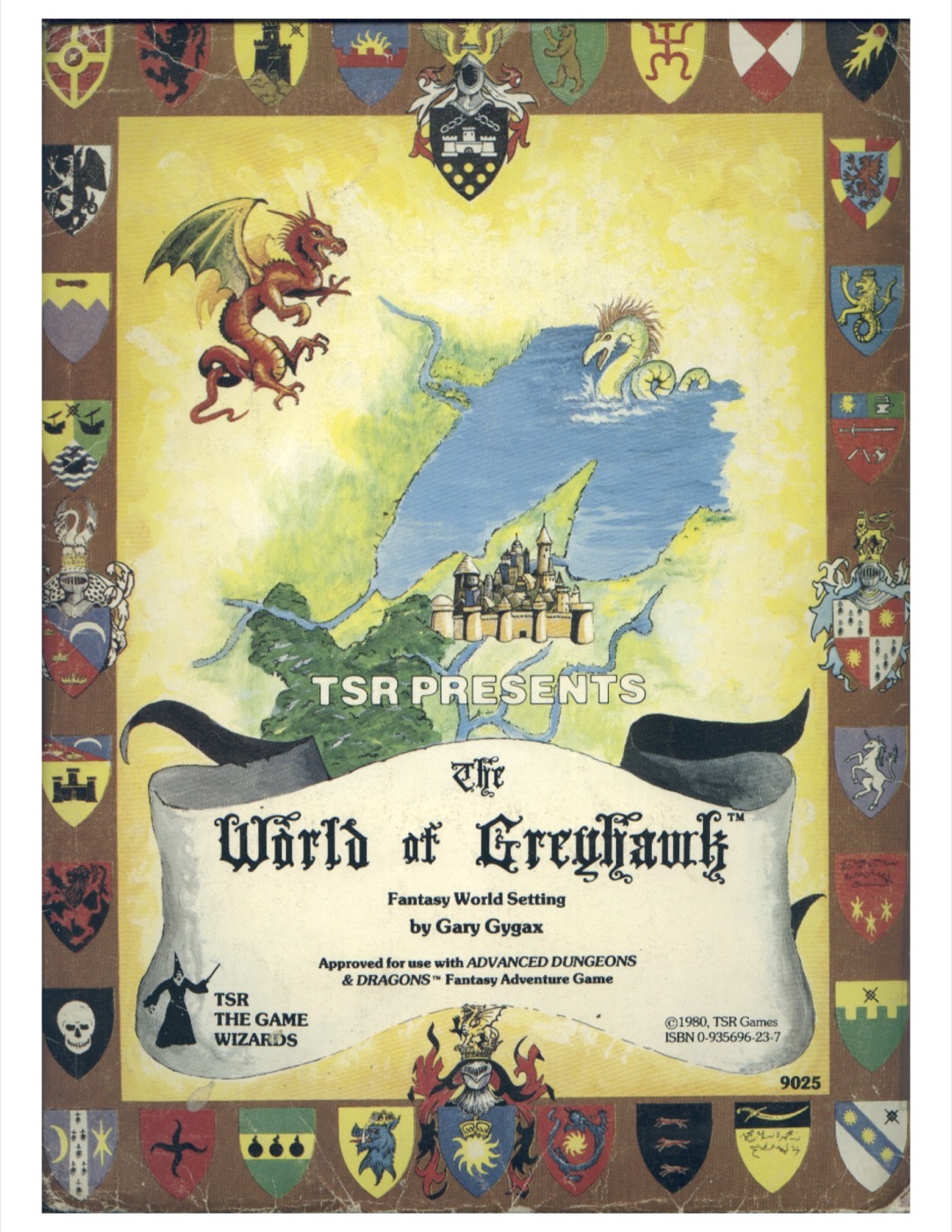
As for the world of Greyhawk box set itself, there are references within the text as well as imagery that make it clear heraldry is very much a part of the setting.
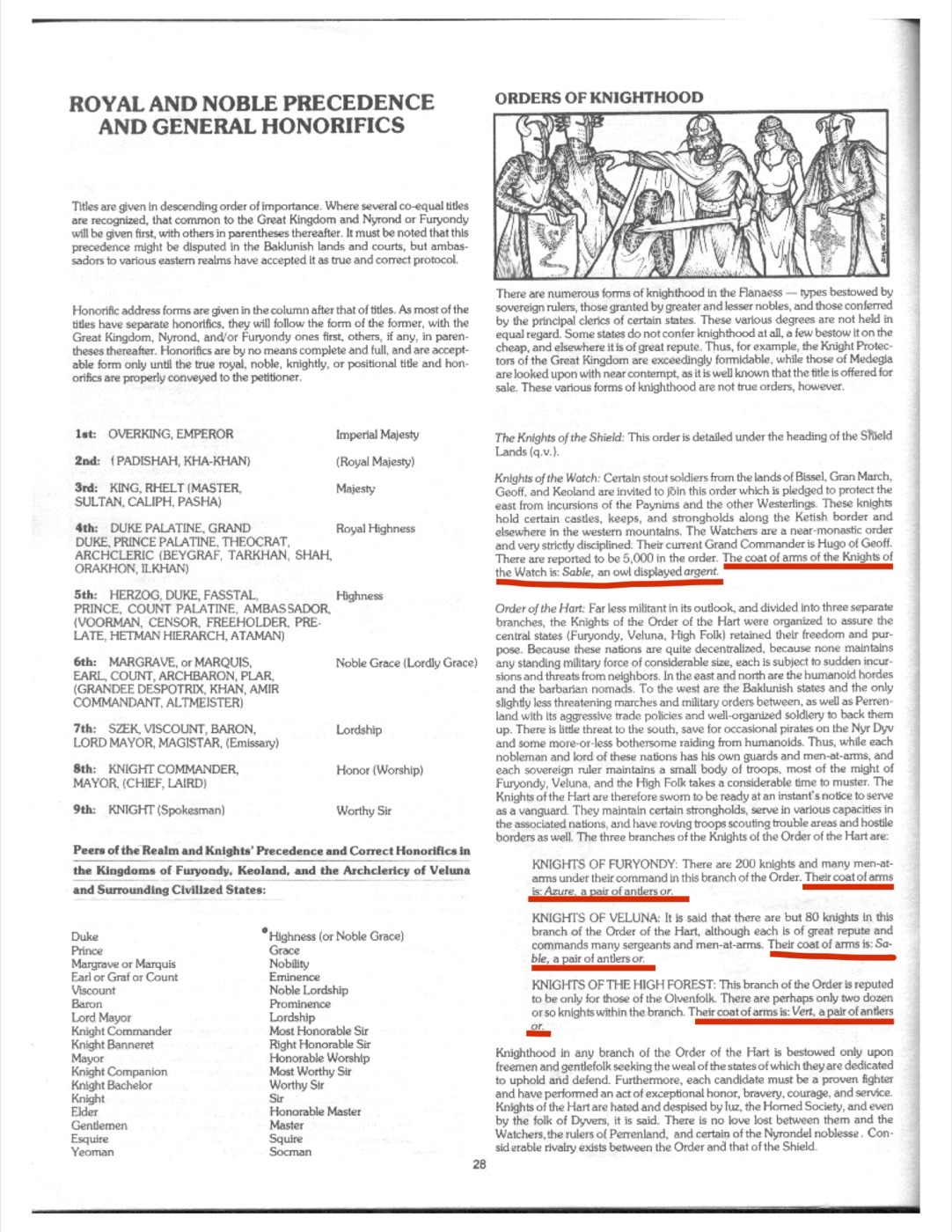
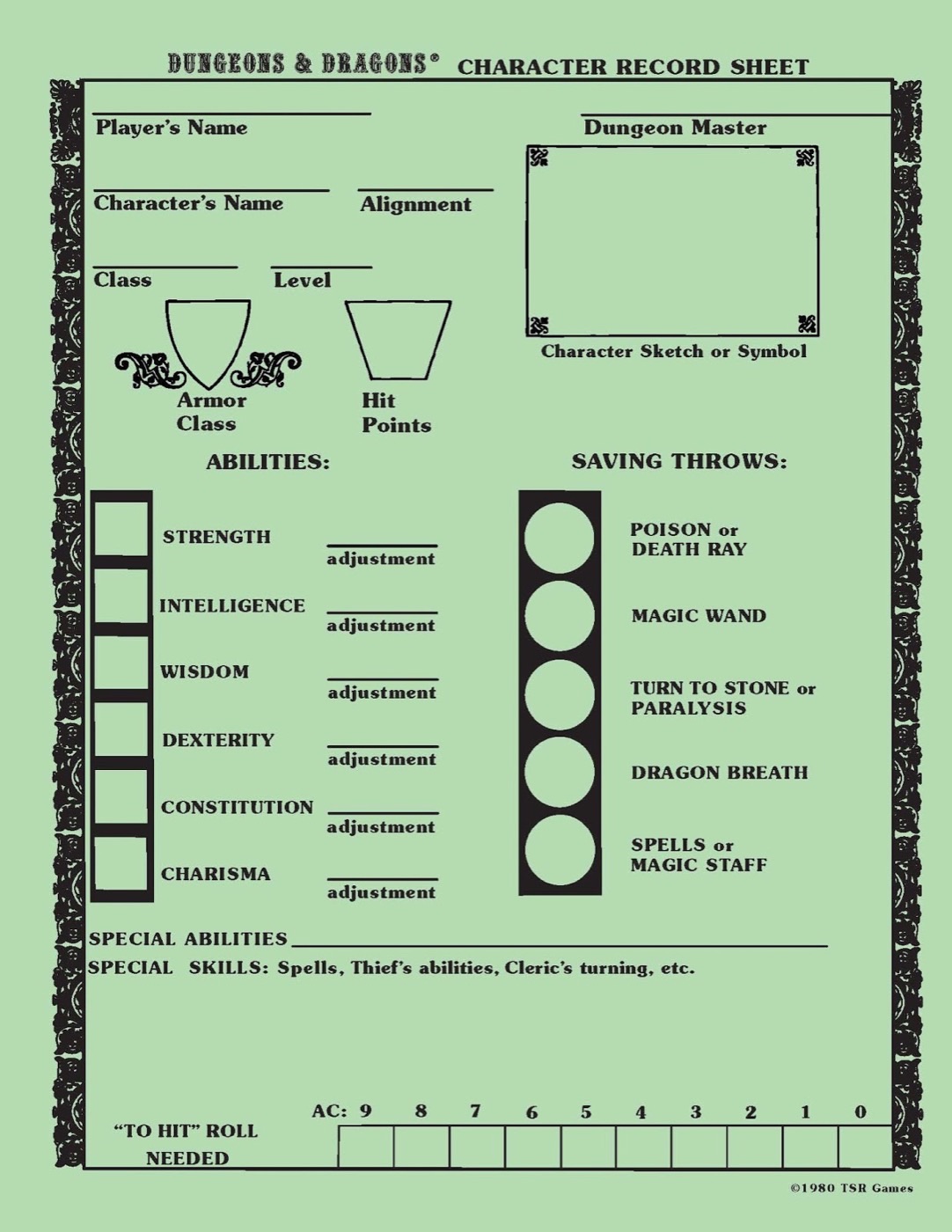
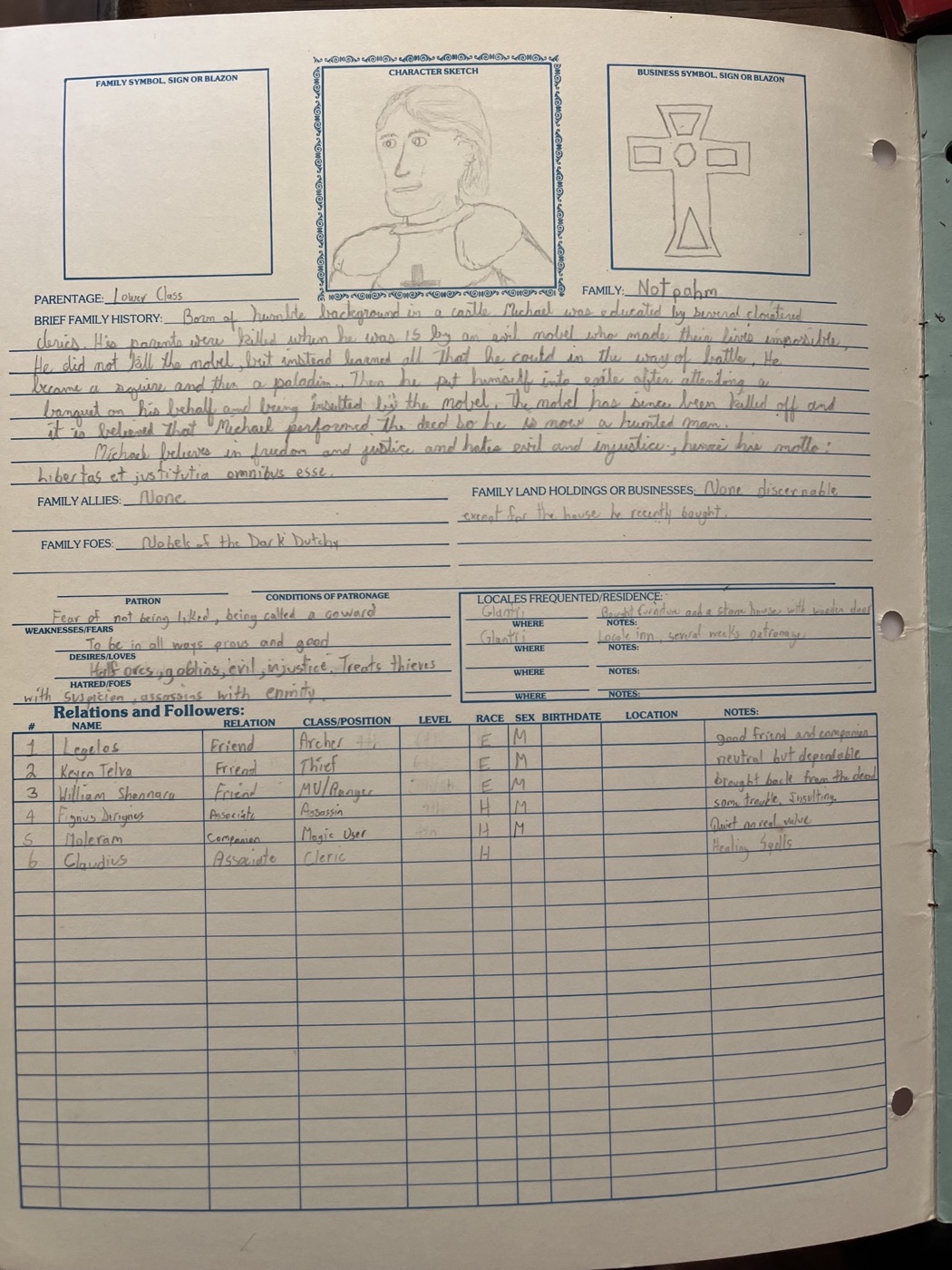
The character record sheets for both the Basic (TSR 9037; 1980, 1981) and Advanced (TSR 9029; 1979, 1981) rules also made references to a character’s “Symbol” or “Family Symbol, Sign or Blazon”
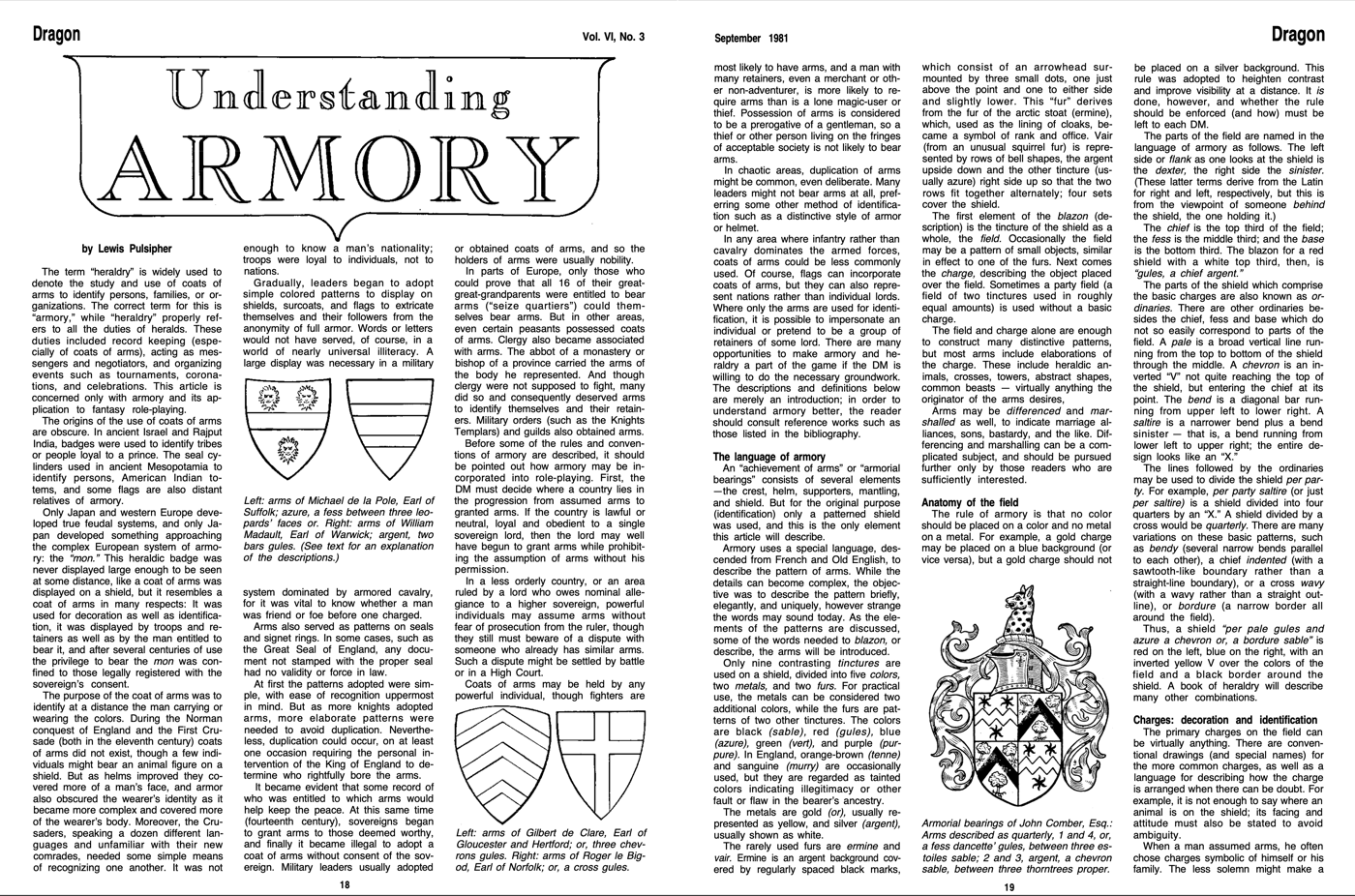
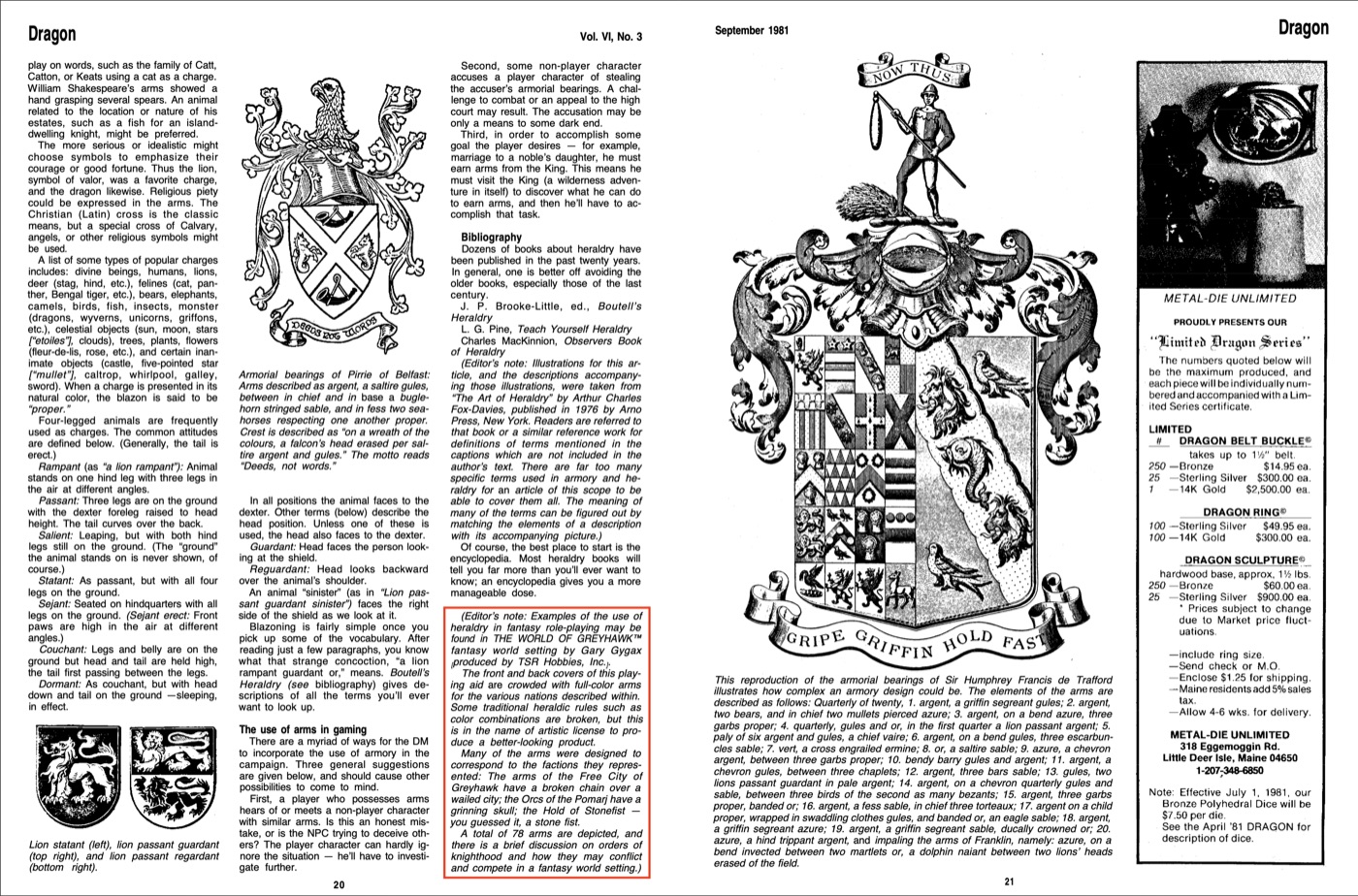
In Dragon #53, September 1981, pp. 18-21, Lew Pulsipher wrote an article on heraldry. He also took note that the coats of arms in Greyhawk took artistic license and did not strictly conform to heraldic norms.
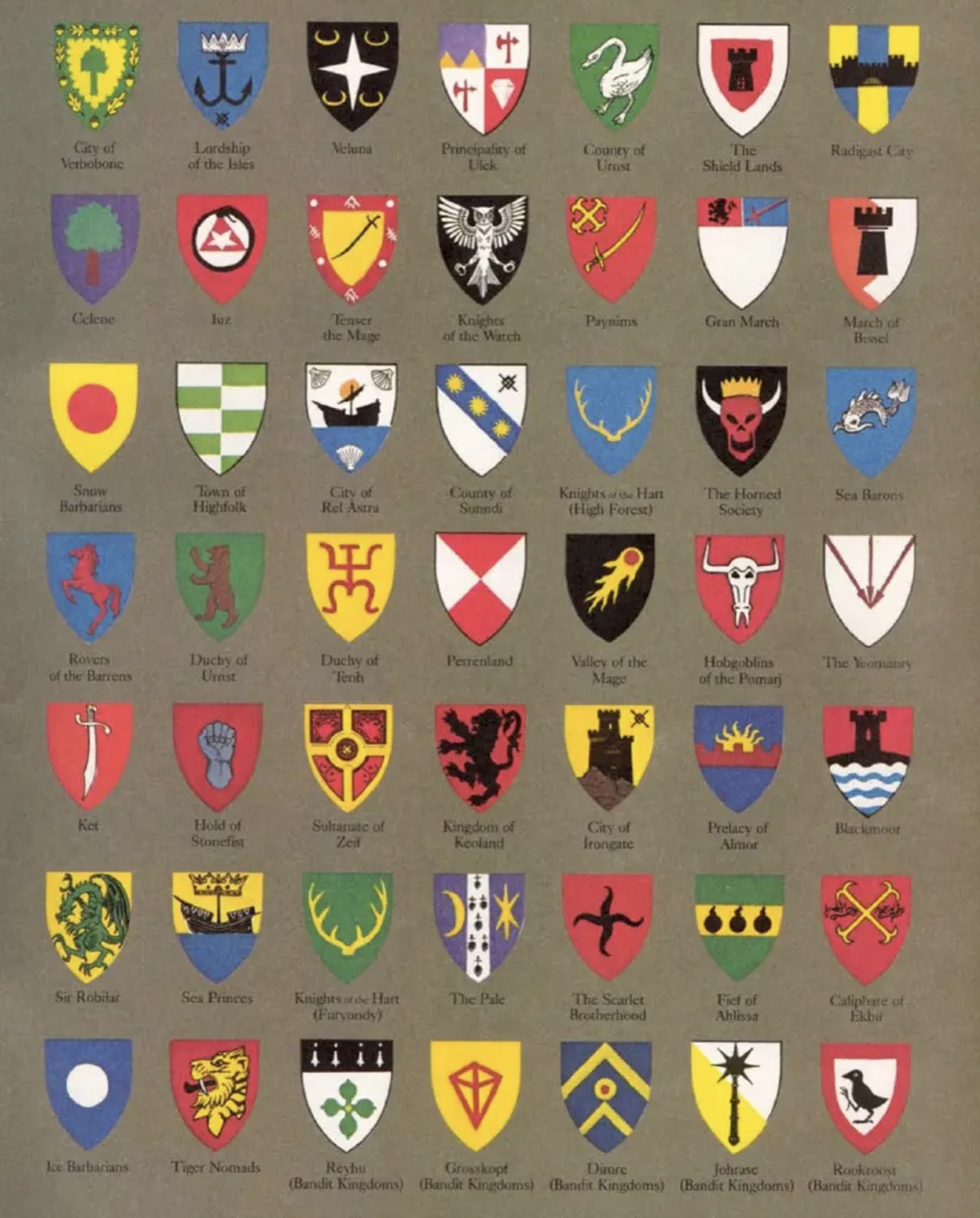
The 1983 version of the Greyhawk Boxed set provided captions for the shield devices.
Rolling Back The Years
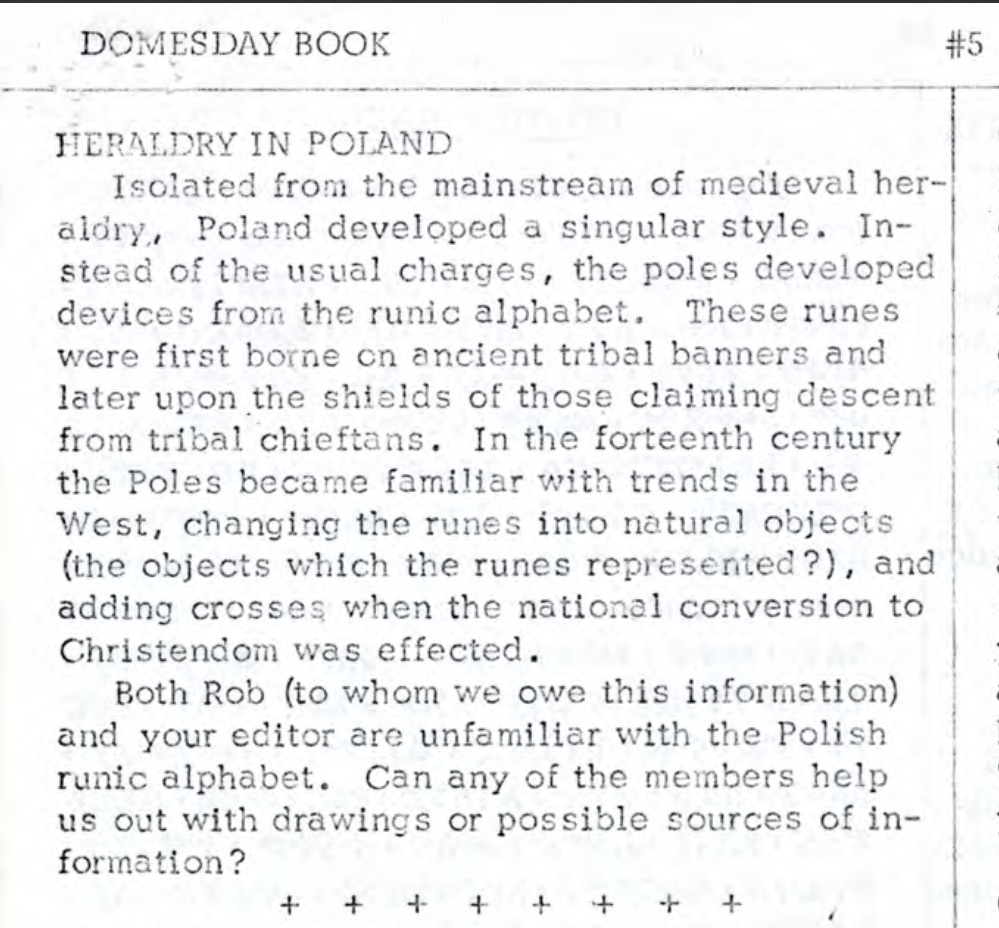
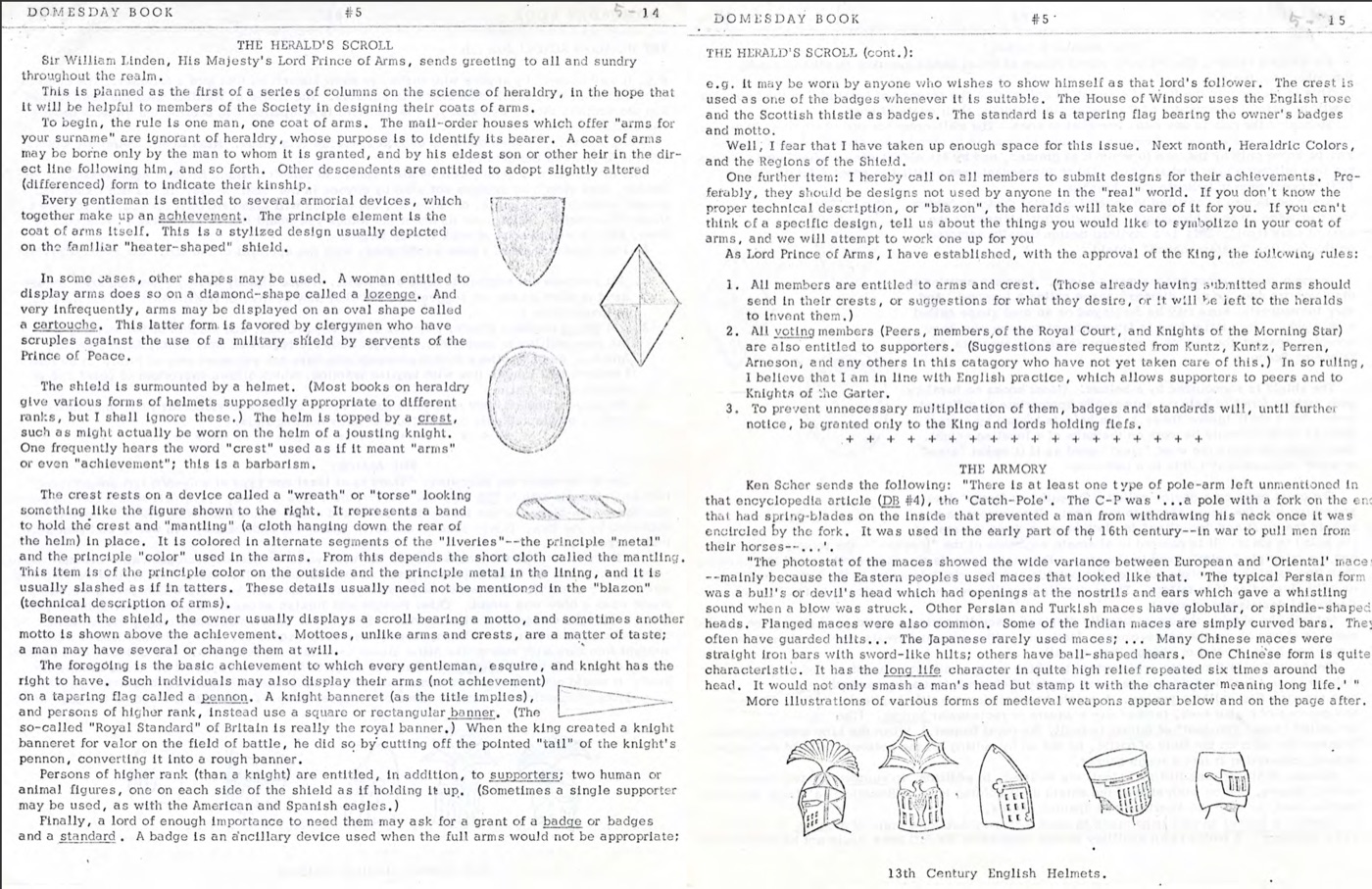
The interest in heraldry in Lake Geneva long predates the launch of original Dungeons & Dragons and was present even before Chainmail was published. In the Castles & Crusades Society’s zine Doomesday #5 (1 July 1970) on pp. 14-15, you can see an article on heraldry by William Linden. Linden asks for members to submit their own arms and crest, but limits badges and standards to only enfeoffed nobles of the C&C Society. On p. 24 there is a short blurb on Polish heraldry. And on p. 29 there is an article on Japanese heraldry.
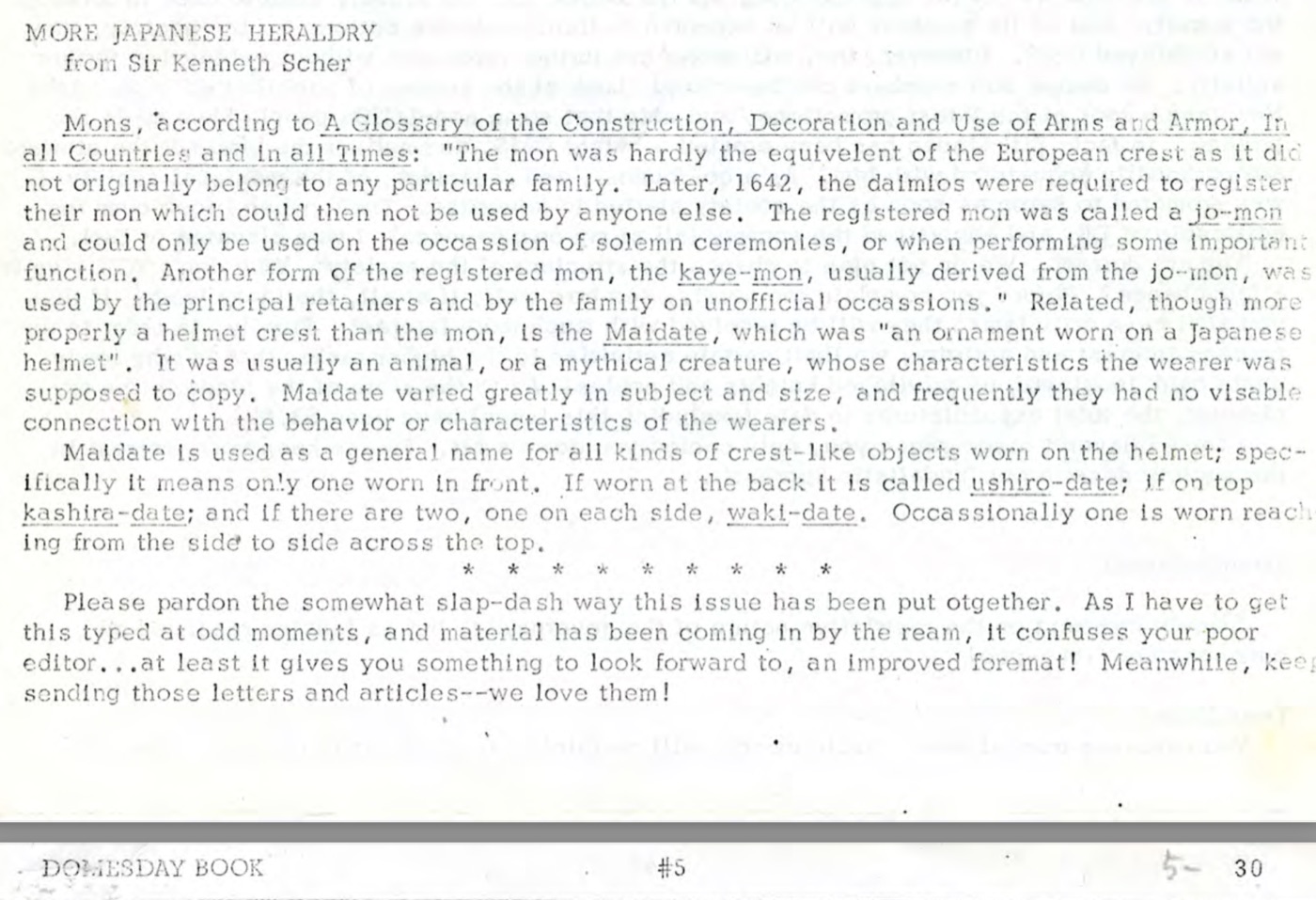
The article on Japanese Heraldry refers to George Cameron Stone, A Glossary of the Construction, Decoration and Use of Arms and Armor, In all Countries and In all Times: Together With Some Closely Related Subjects, Jack Brussel, New York, 1934, available at https://archive.org/details/glossaryofconstr0000geor/page/n5/mode/2up. (Spoiler: this book refers to banded, splint, scale, and studded armor though it also calls back to FFoulkes on this. Not a big revelation, simply another confirmation that Gary Gygax did not make up these armor types out of thin air. He was relying on scholarship that still seems quite valid to my eyes.)
The article on Polish runes intrigued me so I did some digging. Footnote 11 from the wikipedia article on Polish Heraldry was helpful here. There were early devices on Polish shields. Per Marcin Hlebionek, these were “pre-heraldic signs” that were little more than “arrangements of lines.” They may have only been on personal seals, not necessarily upon shields.
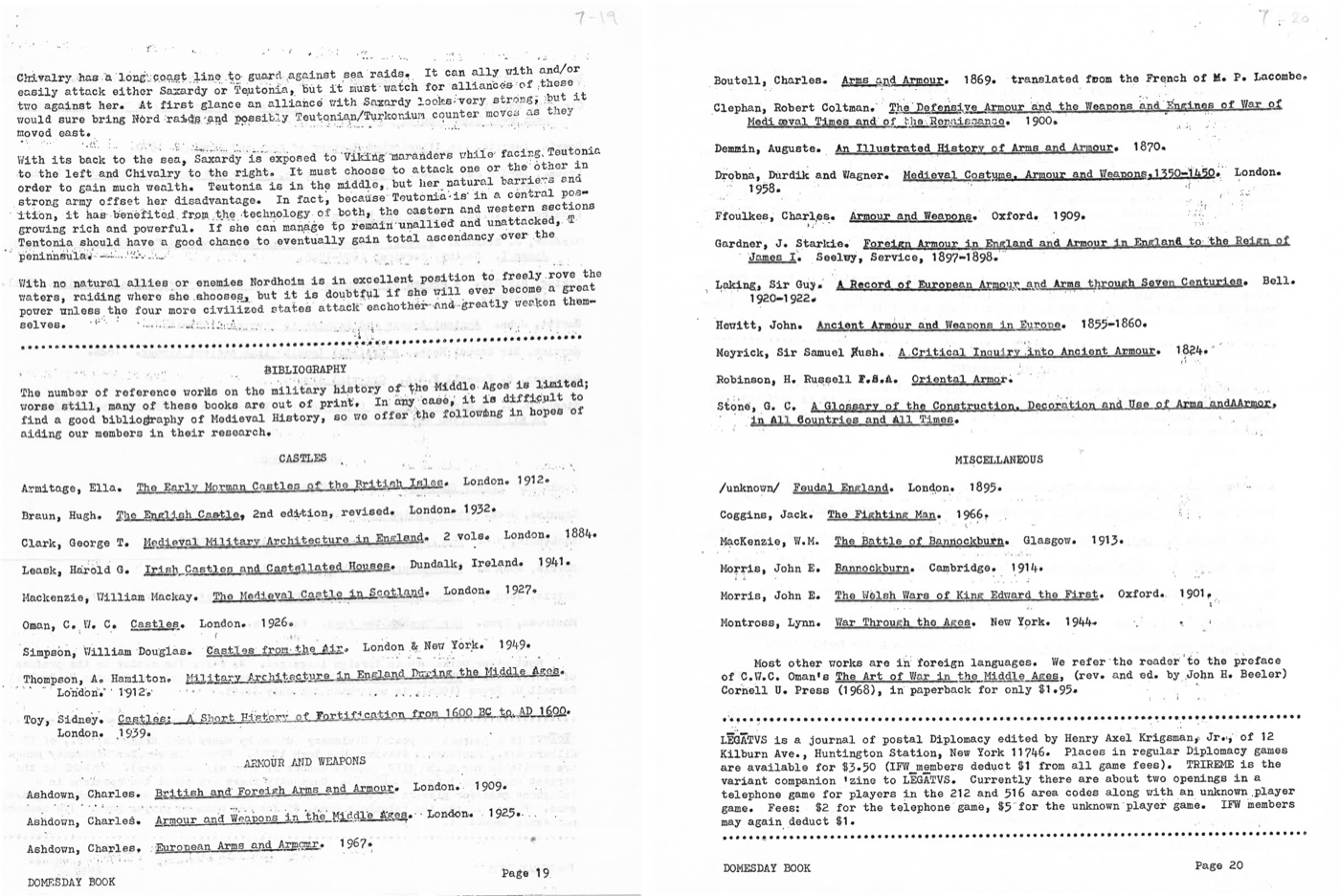
Domesday #7, September 1970 gives us an interesting bibliography of works that were part of, presumably, a shared library for the C&C Society. Independently of this, when I was researching the potential origins of the heraldry in Chainmail, Claude and Gemini gave me some interesting trails to follow. Claude suggested that I take a look Charles Boutelle as a potential source for Chainmail’s heraldic images. When I saw Boutelle’s name in this bibliography, my research instincts told me I was on the right track. So I kept pulling on that thread, even though I did not find Arms and Armor, I think you’ll agree my instincts were on target.
Claude also pointed me at the Appendix N Plus blog. It seems yet another amateur sleuth has looked at the heraldic images in Chainmail. I do not fully agree with ?his? conclusions in his first blog post (Of Armorial Bearings, part one). I do like the connection he has made to Three Hearts, Three Lions’ cover art. I found that ?he? has better findings regarding early Polish heraldry than my own cursory research (Cf. Of Armorial Bearings, pt. 2 and footnote viii in particular.)

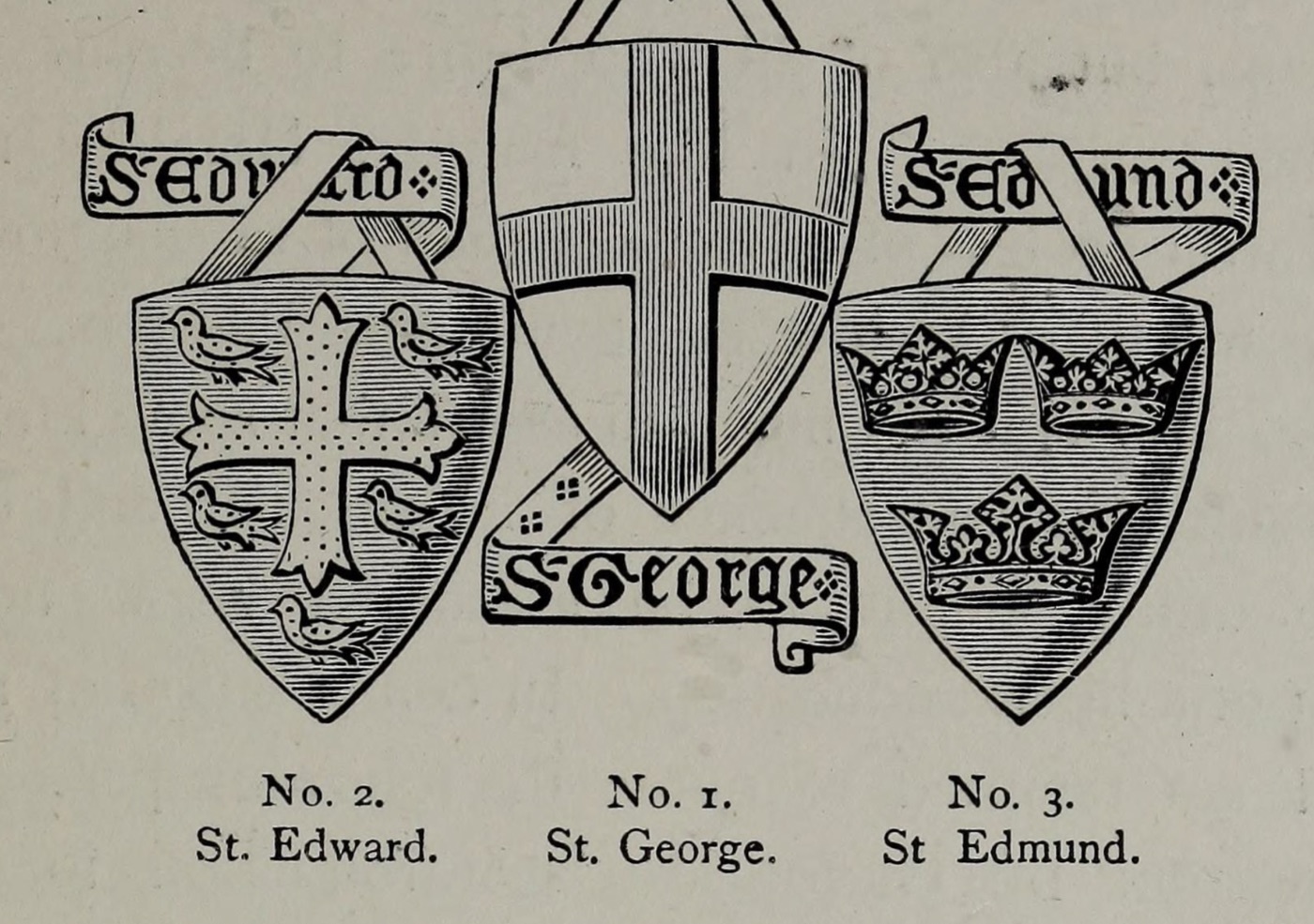
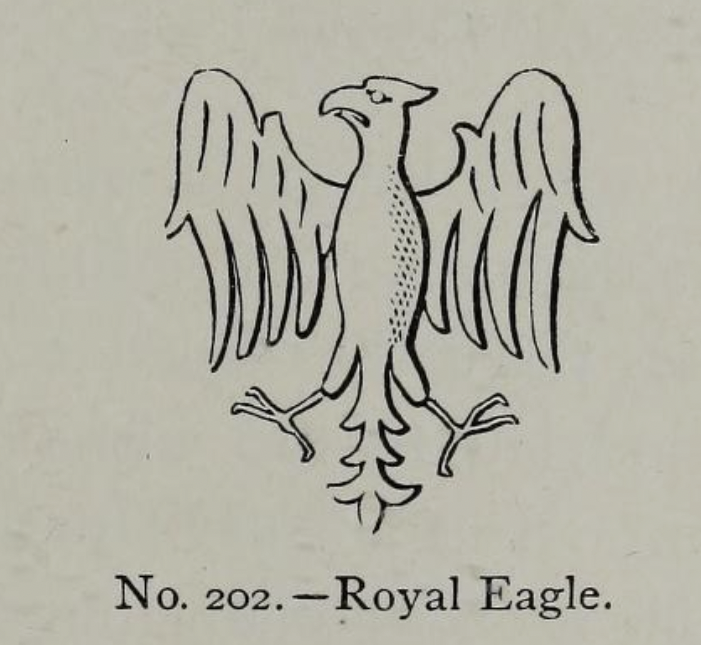
For me, it seems more likely that Don Lowry (credited as the illustrator in all editions of Chainmail) has used one of Boutell’s works as his inspiration for the heraldic symbols at the front of Chainmail. For example, within one of Boutell’s works we find these images within a few pages of one another:
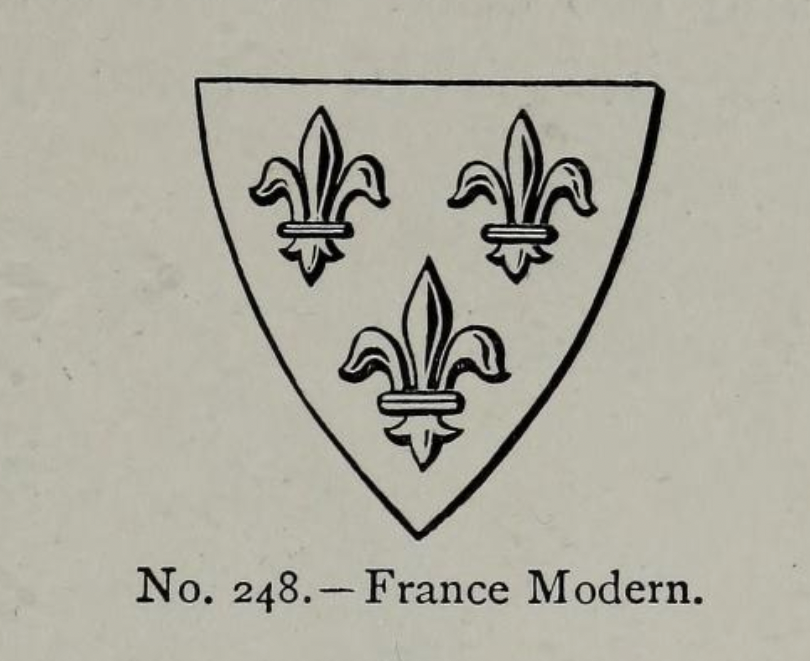
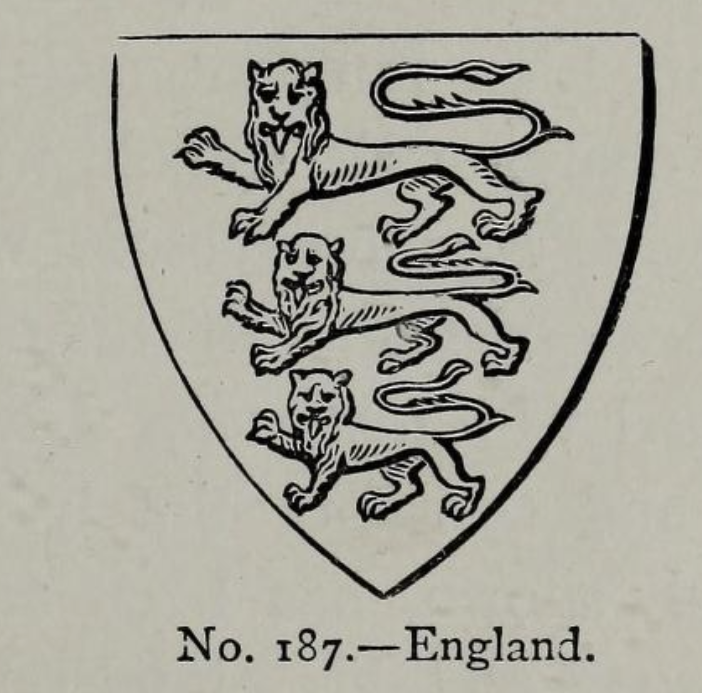
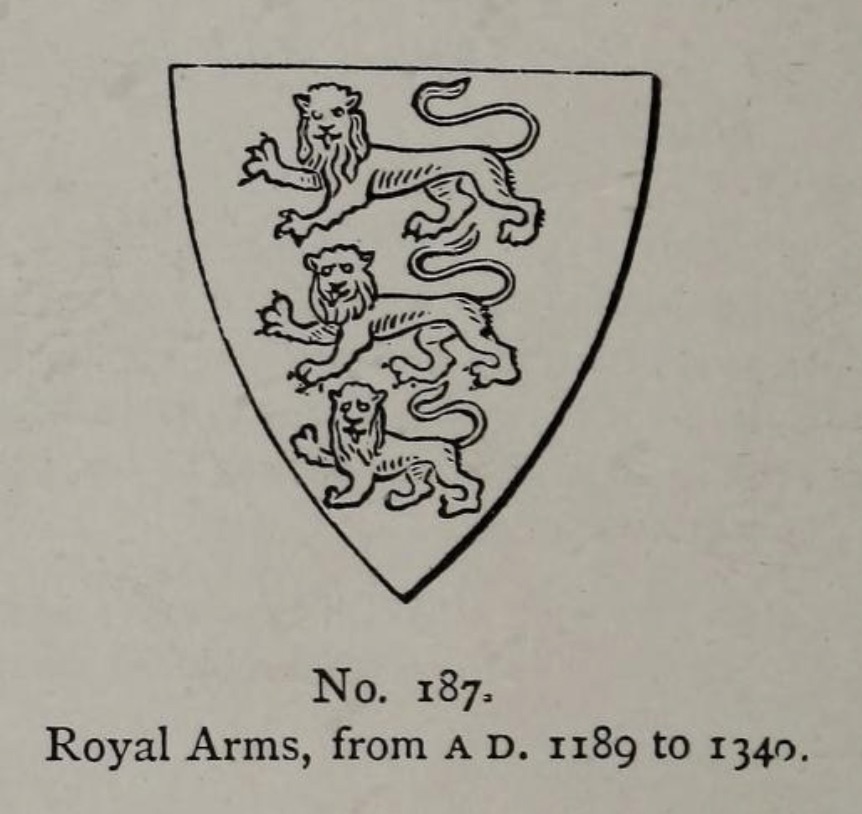
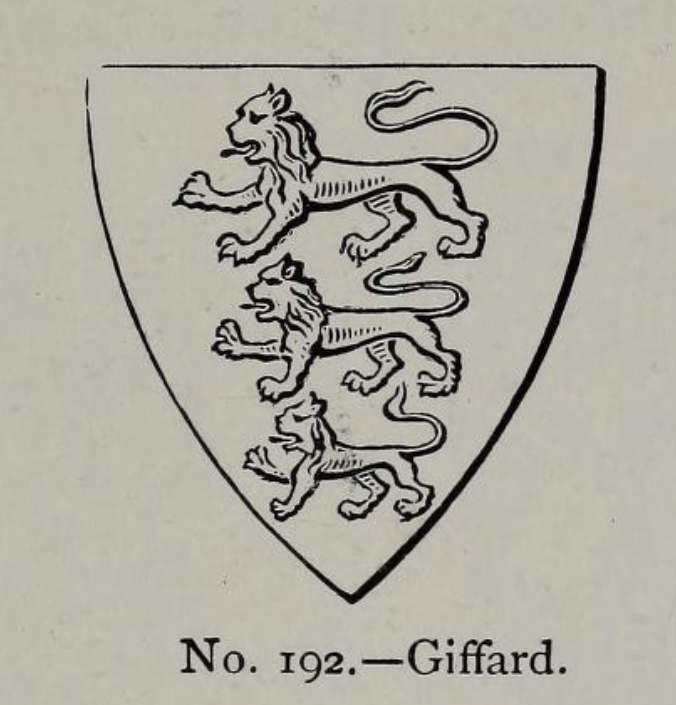
For reference, here is the heraldic image at the top of page 6 of Chainmail 1st edition:
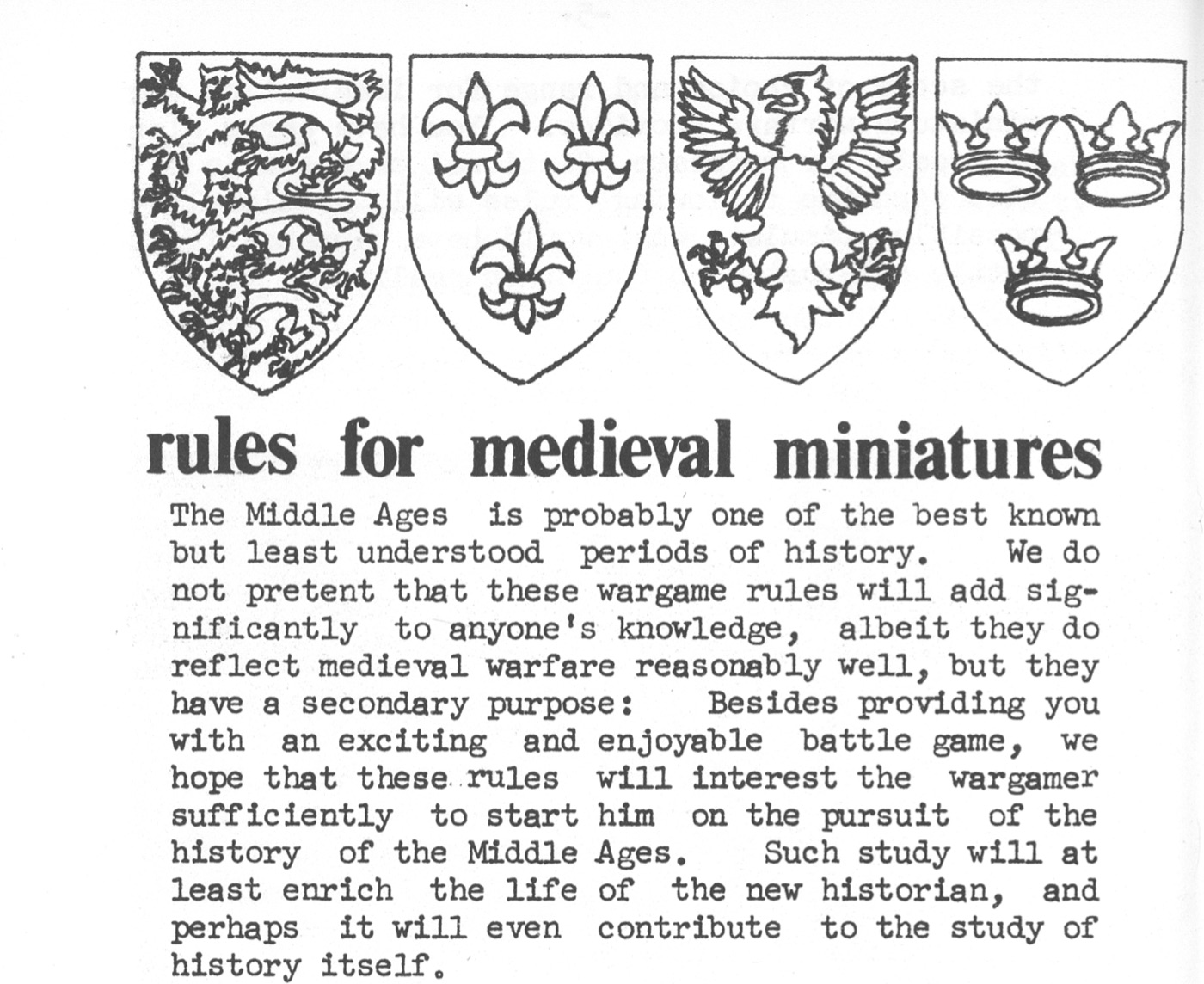
Now take a look at Boutell’s work (resized a bit) when closely compared to Don Lowry’s hand:
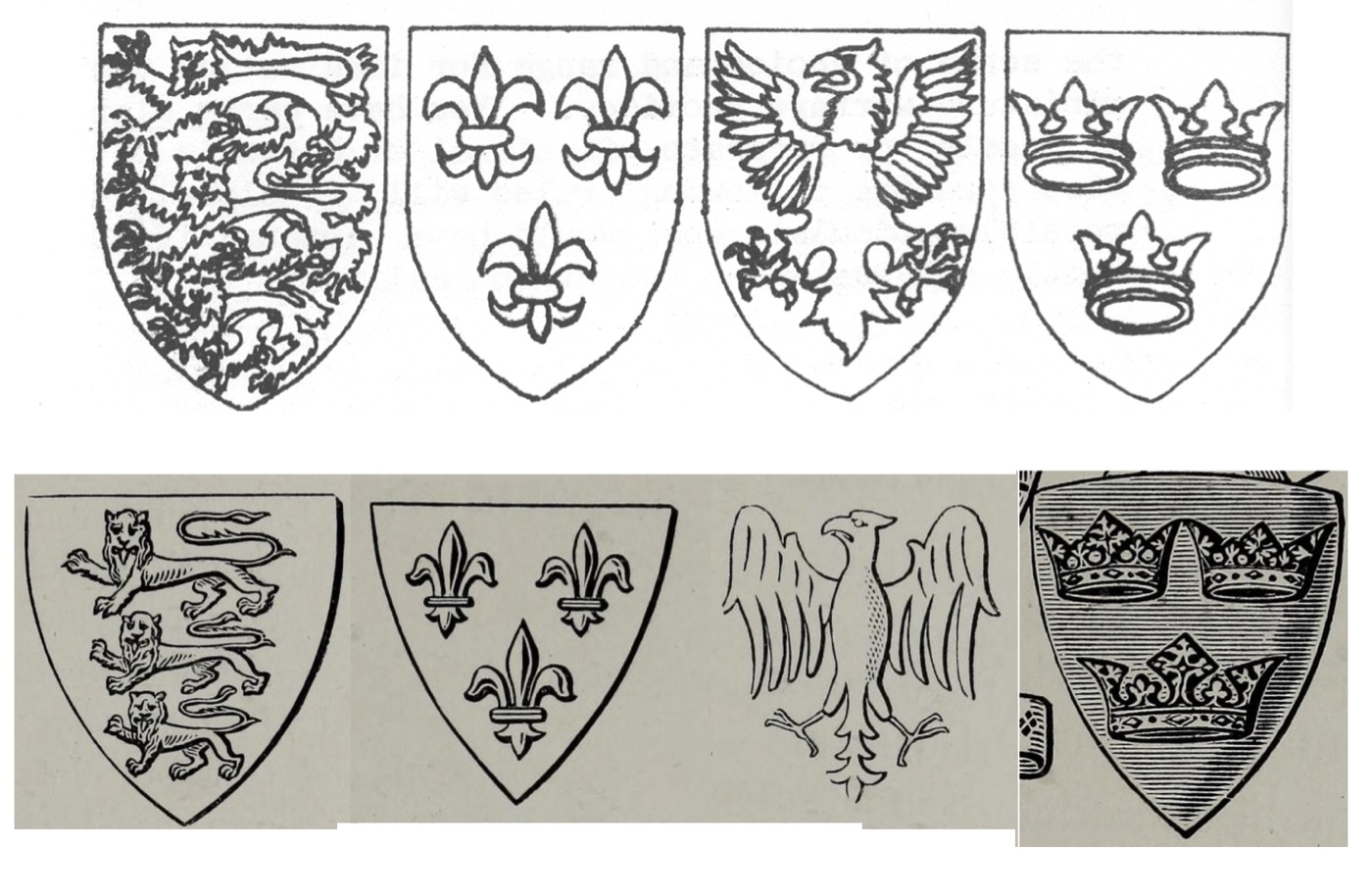
Could this be the inspiration? You be the judge. (Cf. Charles Boutell, English Heraldry, Gibbings and Co., London, 1899, available at https://archive.org/details/englishheraldryb00bout/page/n5/mode/2up.). Or it could be that the true answer is in Boutell’s Arms and Armor book from 1869.
Why is heraldry important? For that, you need to stick around for part 2 where I will discuss jousting, helms, shields, crests, castle occupants, and more. In part 3, I will conclude by looking at social class. Without understanding what has been lost from D&D, it’s hard to see how it all connected together. The connections were implicit not explicit, and more and more of these links were lost with each edition. To serve up some of that early D&D flavor, your campaign setting may need just a sprinkling of seasoning. Stay tuned.
Post Script: Two other volumes I came across while researching this article may be of interest. These both have, due to age, public domain images of shields, arms, crests, helms, devices, etc.:
- S.T. Aveling, Heraldry, Ancient and Modern : including Boutell’s Heraldry, London ; New York : Frederick Warne and Co., 1890 available at https://archive.org/details/heraldryancientm00boutrich/page/n7/mode/2up.
- Arthur Charles Fox-Davies, A Complete Guide to Heraldry, T.C. and E.C. Jack, London, 1909, available at https://archive.org/details/completeguidetoh00foxdrich/page/n5/mode/2up.
On Heraldry & Social Class in Early D&D: Part 1 · Part 2 · Part 3
Originally published on Substack on May 10, 2026.