A Tale of Two . . . Characters
Rodney Hampton
- 8 minutes read - 1655 wordsIt was the worst of combat systems; it was the best of combat systems. Discerning Dave Arneson’s Blackmoor Combat System - Part 2
When I first wrote Midwest Fantasy Wargame: The Primeval RPG . . . I was only looking at the Spanish Royals character sheet and the H.W. Dumbo character sheet from David Megarry. I discarded Dumbo’s weapon table as some kind of oddity or one off. Unfortunately, that led me down the wrong path. What is doubly irritating about this is that there is a blog post from D.H. Boggs, and the character sheet for the Wizard of the Woods played by Pete Gaylord in Playing at the World (p. 367) by Jon Peterson. It is only when analyzing both of these character sheets side by side that it seems clear what Arneson may have been up to when devising his combat system.
In 1972, Arneson had access to Chainmail 1st edition. He was also collaborating with Gary Gygax and Mike Carr (of Fight in the Skies / Dawn Patrol fame) on Don’t Give Up the Ship. The melee resolution system in DGUTS is straight out of Totten’s Strategos. This led me to believe that Arneson may have simply tried to adapt Strategos A (still unpublished - thanks hoarders!) to a man-to-man or skirmish style game. And so that is the path I went down, using Totten’s Strategos as one guide, and David Wesely’s Valley Forge game as the other since at that point I did not have a copy of Strategos N. This boondoggle led me to devise a system - playable at the table - that used a handful of Totten’s ratios. For ranged combat (non-hand hurled), I took Totten’s ranged combat system, rewrote the teetotum (1d12) table so that it was more sensible (low roll - bad, high roll - good). And otherwise took the approach of building and play testing this system until a Referee and intelligent players could get it to work. Combat was still a slog. It felt off, so I rolled back the clock further and took the Barker / Featherstone melee system and jousting systems and put them in as additional options.
Let’s take a look at the two character sheets with fresh eyes. Again, I am citing fair use to justify using these snippets. The average of the scores for the weapons on the Dumbo sheet is 7.05 and the average for the Wizard of the Woods is 6.667. The average of a 2d6 distribution is 7. The only conclusion is that these numbers are weapon proficiencies based on the same 2d6 system that was in use for other skills (like throwing, horsemanship, etc.) and attributes (brains, looks, etc.) that were in use at that time in Blackmoor. As we can see a few of these values being crossed out and increased, it seems like this was a higher = better system meaning the mechanism to succeed at a roll was to roll under the total.
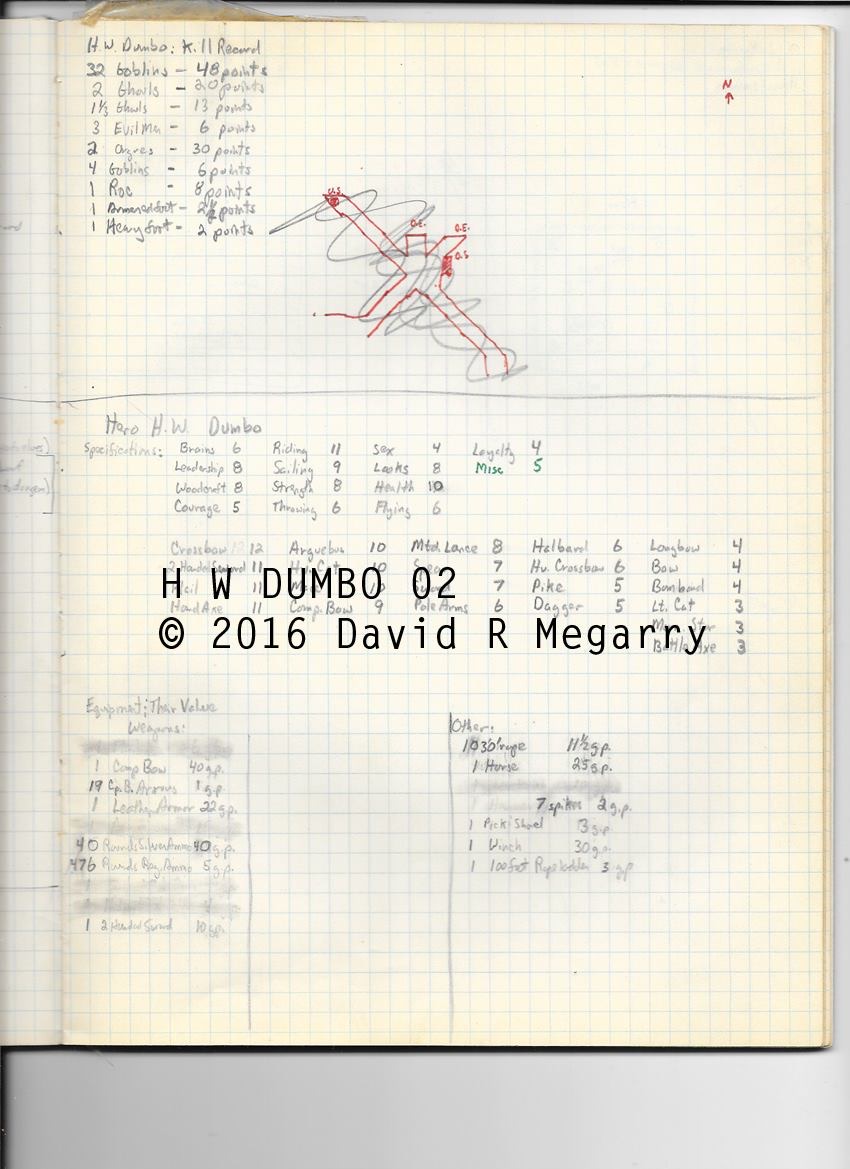
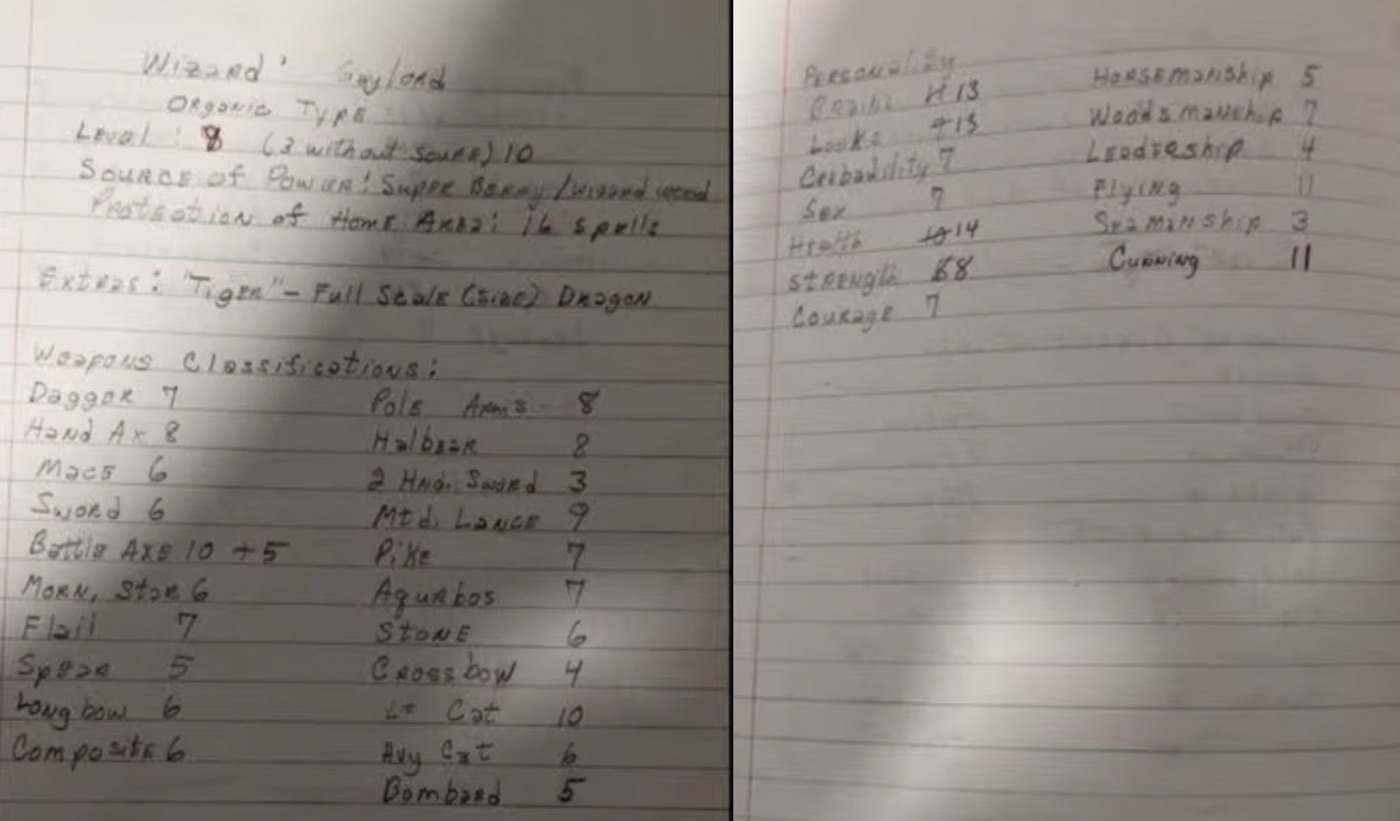
The weapons are not listed in any particular order but the presence of the “Mtd. Lance” in both is telling, since this is exactly how a Mounted Lance is listed in Chainmail 1st edition, 2nd edition, and 3rd edition.
The Wizard has the ability to use “Stone” which could either be a stone firing ballista or perhaps chucking a boulder like a Giant. The Wizard is missing entries for the Bow and Heavy Crossbow - perhaps an omission. Strangely both have Light and Heavy Catapult, the Bombard, the Arquebus, and all of the sundry melee and missile weapons we know and love. We won’t discuss why a Wizard might need all these proficiencies on his sheet other than to point out that in Arneson’s First Fantasy Campaign and in the 1973 drafts “Beyond This Point Be Dragons” there are reasons.
The next question that comes to mind is whether or not a roll under system is fair. A character with a proficiency of 2 will always miss and a character with a proficiency of 12 will always hit. For this we must look back to Totten’s Strategos. In it, he says that The Referee “should bear in mind the principle that anything can be attempted. The advisability of an attempt is another thing, and one that it is the object of the War Game to make evident to all concerned by result.” Other quotes illustrate that the proper technique for any game is to quantify the variables applicable to a situation into a set of ratios and turn those ratios into one or more dice rolls keeping in mind that there is always a chance of success and always a chance of failure no matter how bleak the odds. I have previously set these at 1:11 or 11:1 however Totten draws no hard line in the sand.
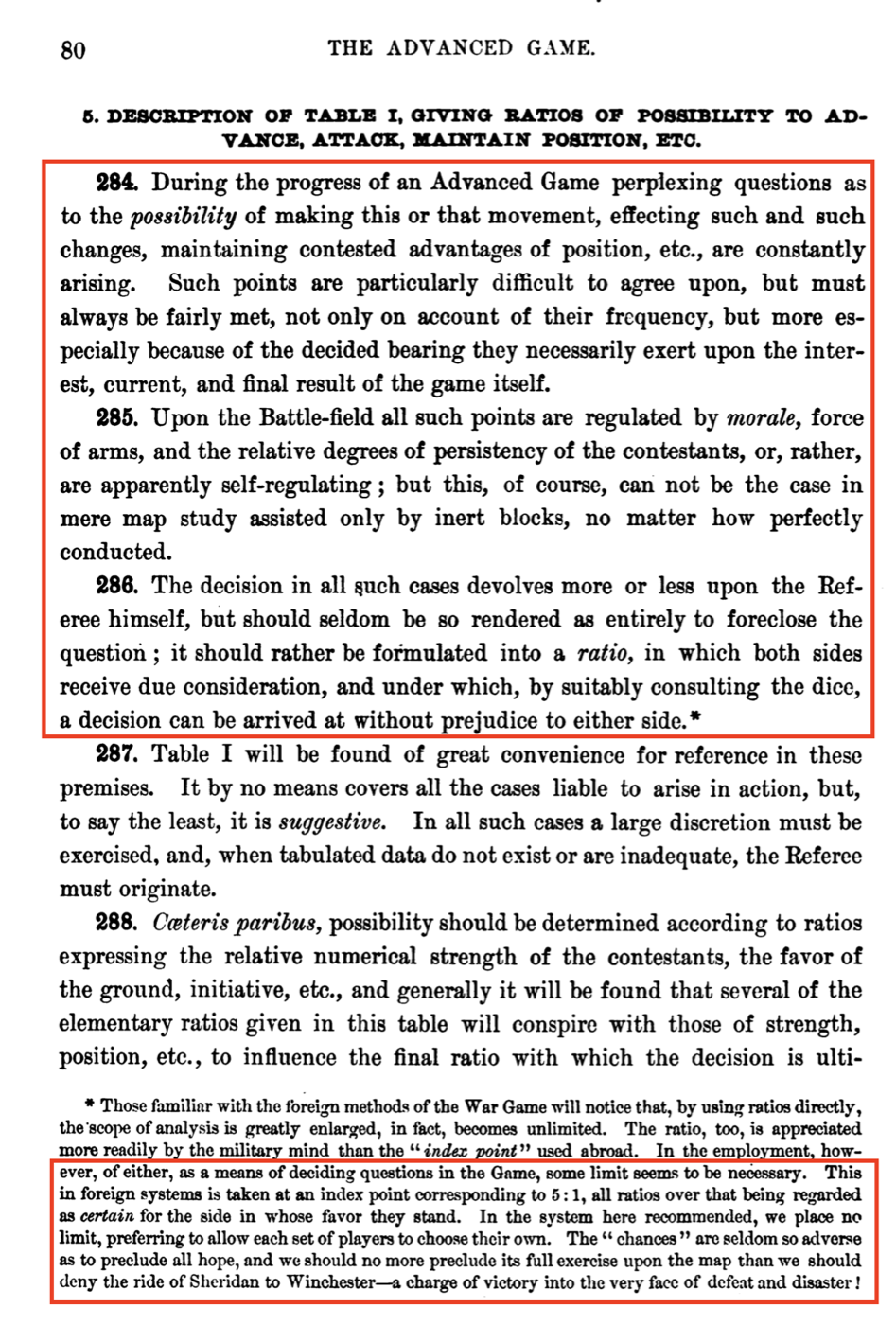
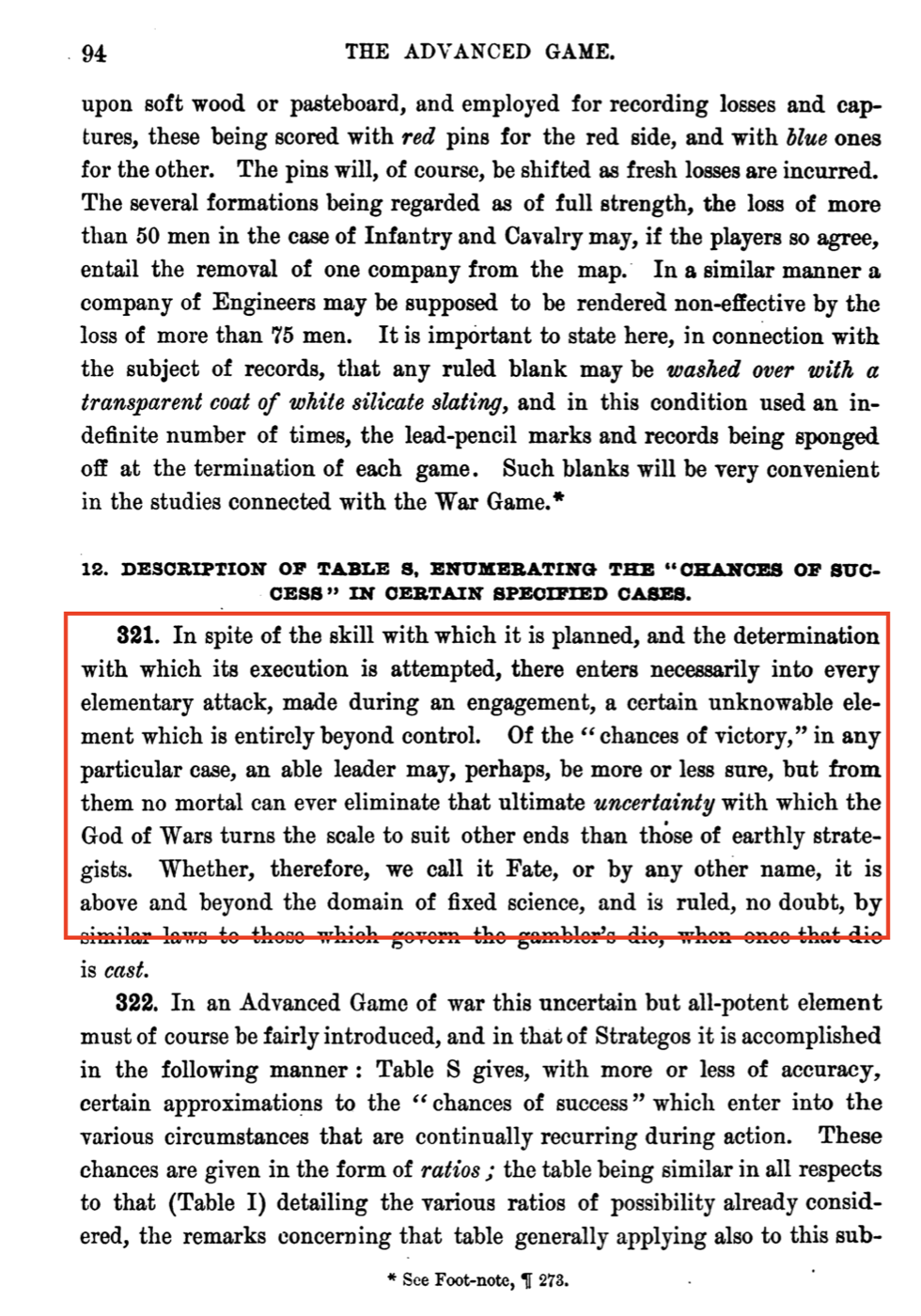
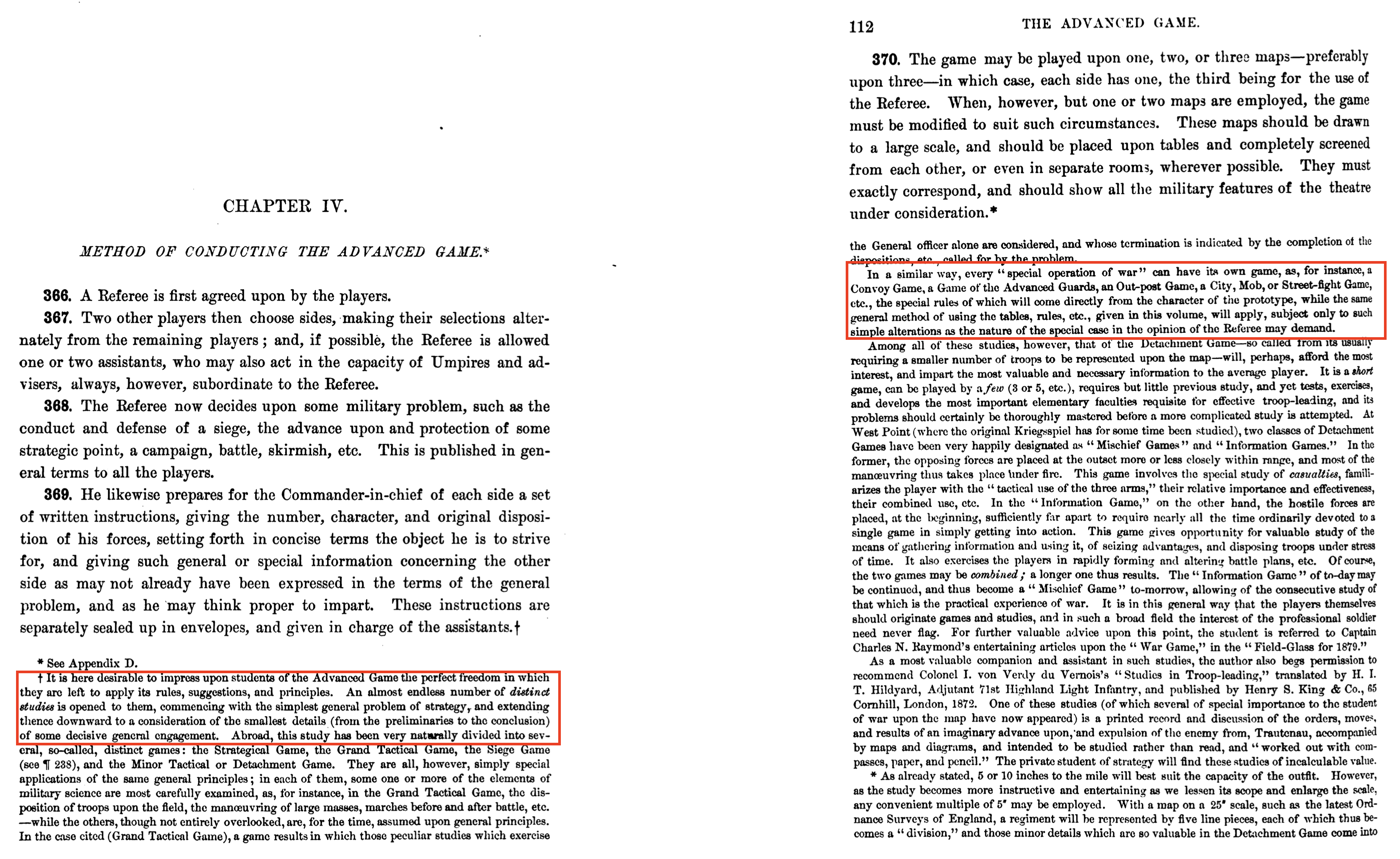
Looking at the 2d6 roll, it is clear that even if the character has 12 in a proficiency such as wielding a sword, there must always be a chance of failure. So it is suggested that the resolution is a strict roll under. Thus, double sixes is always a failure. As to the hopeless stat of 2 in swordsmanship, a set of snake eyes should always be a success. This equates to around a 2.77% chance of failure and 2.77% chance of success.
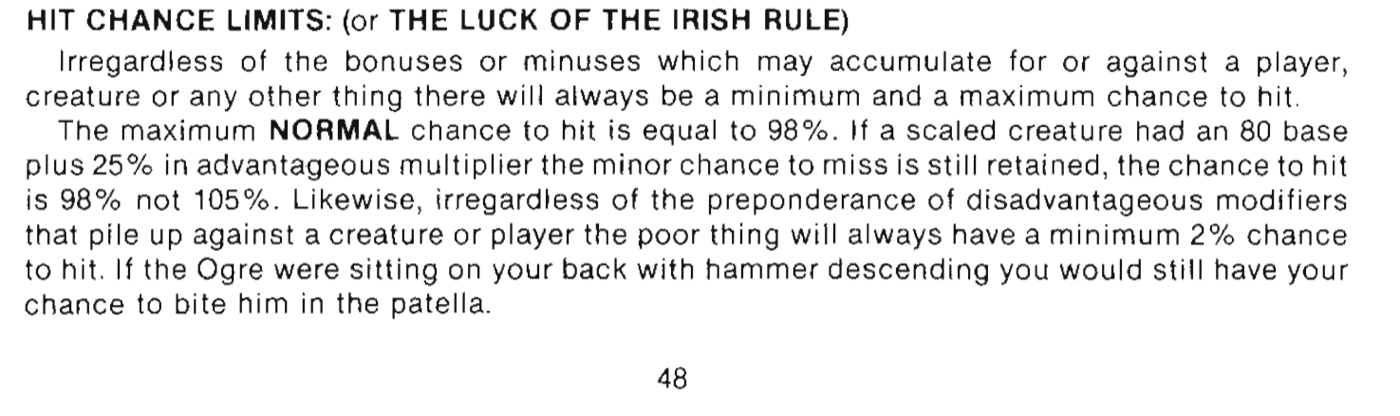
Interestingly enough, when Arneson later collaborated with Richard Snider to write Adventures in Fantasy, this same philosophy was encapsulated in a combat rule entitled “Luck of the Irish” where there was a cap on success and a floor on failure. Even though this is a percentage based system, there is a 2% chance of success and failure much like the 2d6 distribution. Coincidence?
How does the level of experience or Hit Dice factor into this “to hit” / proficiency system? Frankly, it doesn’t - though larger monsters have higher hit dice and may thus affect hit location based on height differential. For that discussion, you will need to await the next blog post. Let’s take a look at the definition of Hit Dice in original Dungeons & Dragons. This may surprise you.
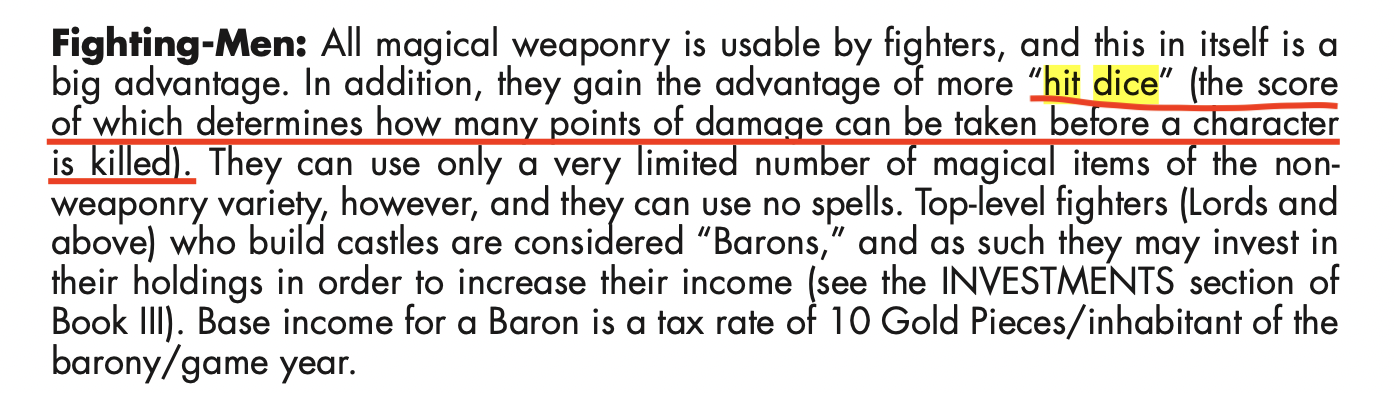
This explanation on p. 6 of LBB#1 from OD&D is the only explanation of Hit Dice you will see in the original rules.
Arneson and Wesely (and all the Twin Cities wargamers worth their salt) would have understood the normal distribution of 2d6 versus a linear result set like rolling a single die. Applying a subtraction to a “to hit” roll of two six-siders would have outsized results depending on the modifier and the roll. Thus, it is extremely unlikely that the armor class was subtracted in any way from this roll, especially if it had more than 6 values. Instead, it seems likely that Armor Class would have given the defending player a chance to roll a “saving throw.” Saving throw is a term that originated in wargaming. You can see it in this in this medieval set of rules written by Tony Bath in the 1950s.
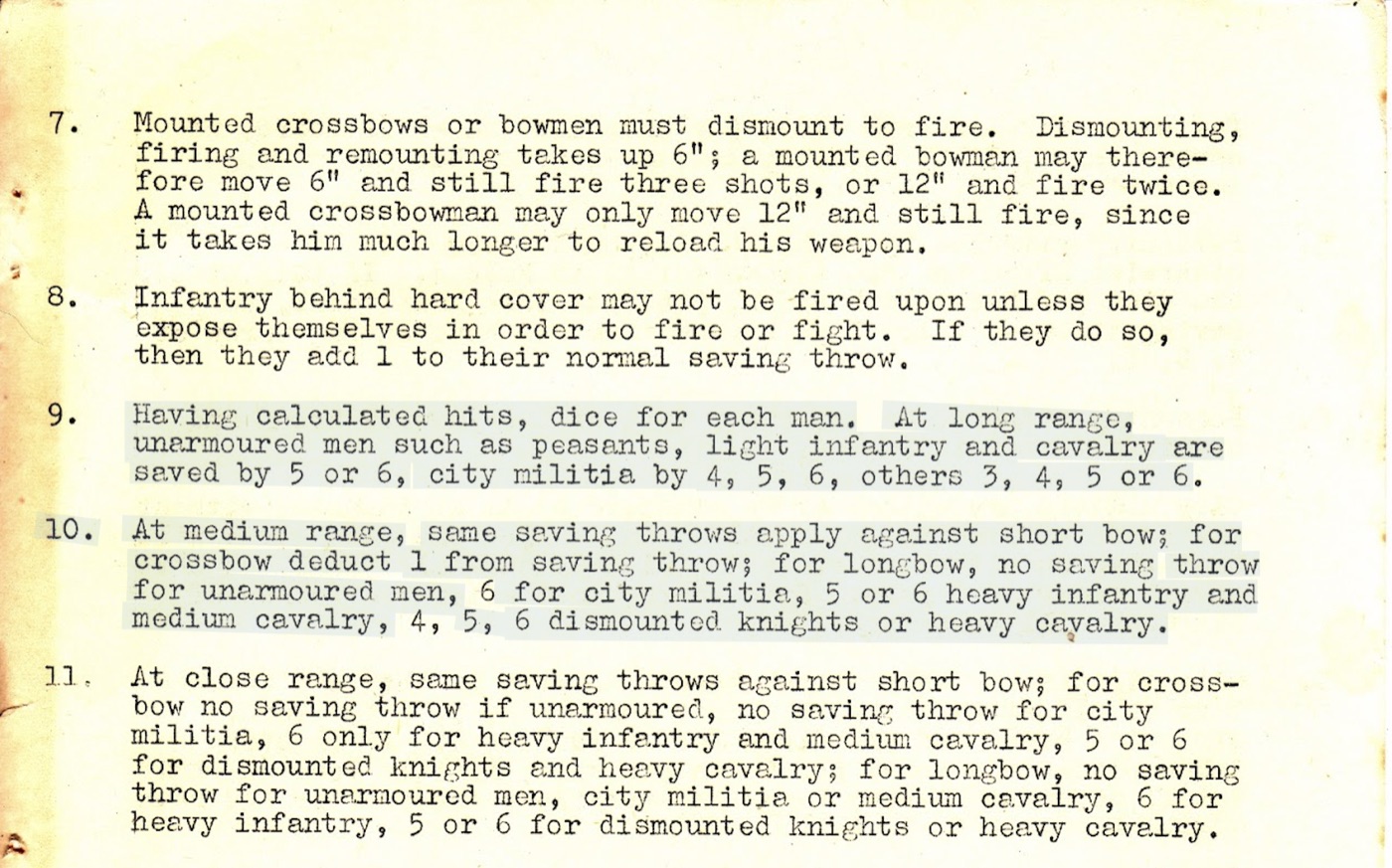
As an aside, Gary Gygax once mentioned that if you want to fill in the gaps in Chainmail, you need to look to Tony Bath. This is but one of many sets of medieval / ancients rules Tony Bath was involved with. For a deeper dive into this topic, see my video series on YouTube.
Thus, I conclude that Dave Arneson gave the defensive player a saving throw based on his/her Armor Class. Furthermore, since Arneson had a d8 at his disposal, the saving throw could operate using a roll over system with 1 always being a failure and 8 always being a success. Thus each tick between levels of armor is linear and consistent.
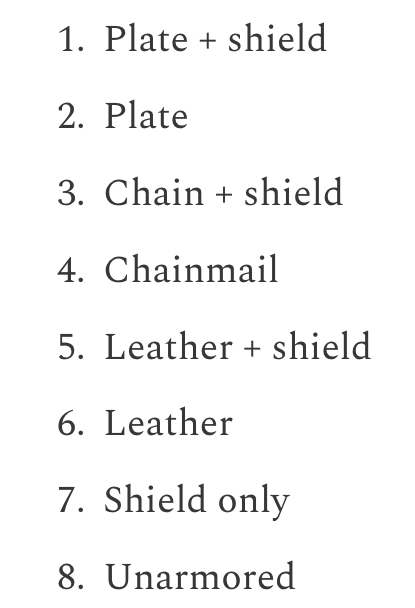
If you are confused, a quick review of Part 1 of this series may be in order. Arneson has a system of Armor Classes that started at 1 (first class armor) and worked its way up to 8 (Unarmored).
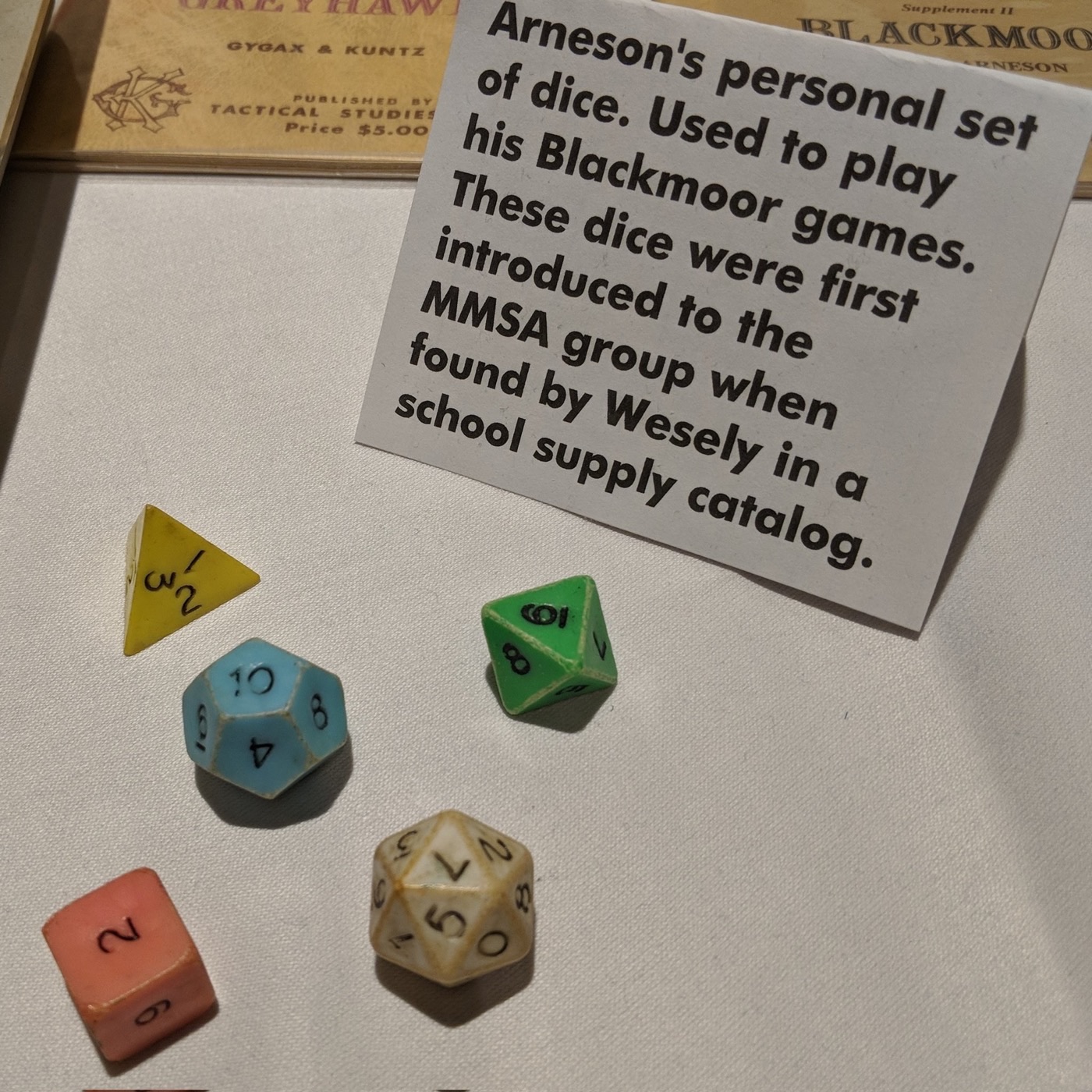
It is possible that Arneson rolled a d10 (notice his twenty sided die is numbered from 0 - 10 twice over) instead of a d8 and was able to use a roll over to save system. In that case a 0 or 1 would always fail, and a 9 would always save. I’m warming up to this idea.
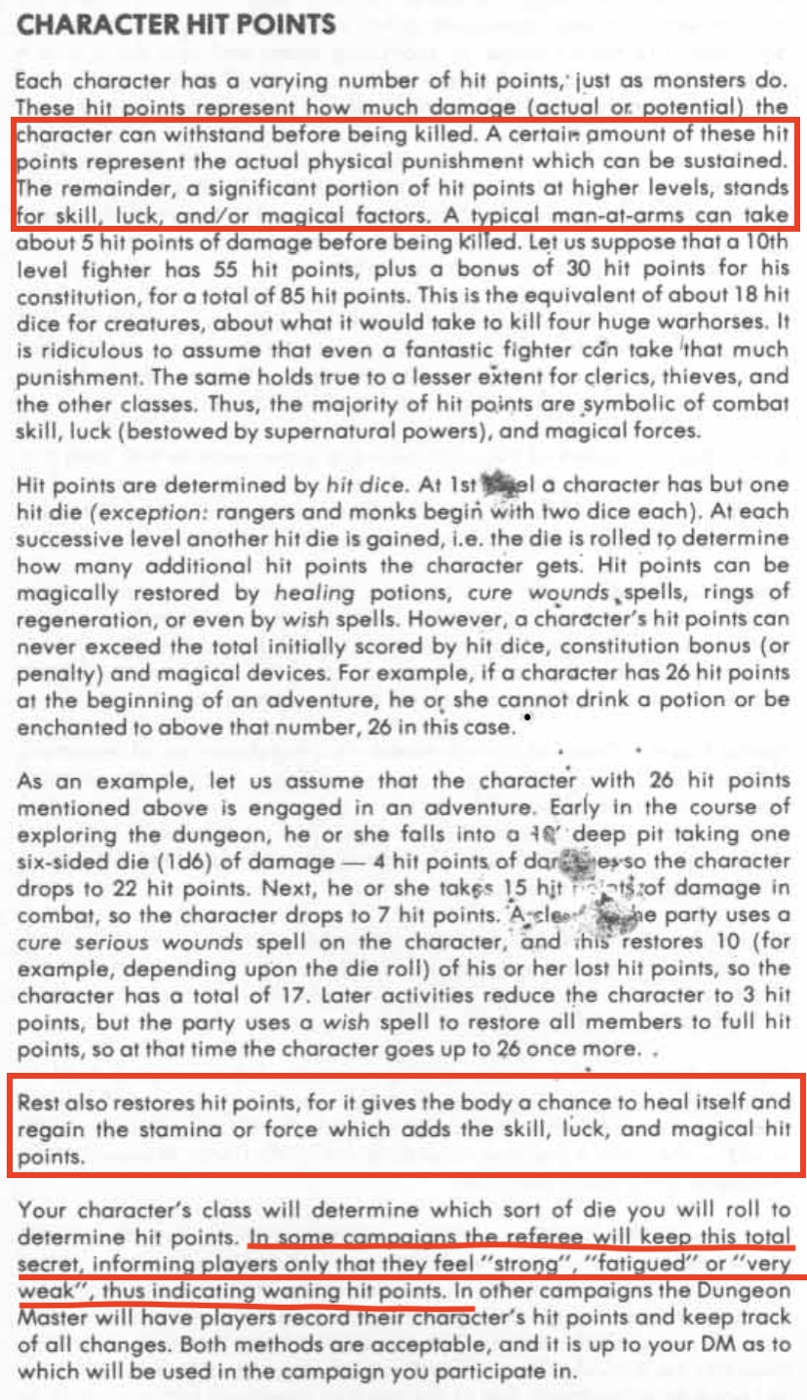
Back to experience and Hit Dice. Do you recall the chart from Fletcher Pratt’s rules? There are only 3 variables there. Likewise, since characters and monsters already have a number of hit points (“hits to kill” aka HTK in early Blackmoor). And since Hit Dice or experience level is directly related to HTK, why would you introduce another variable into this system? Instead, HTK is the level of abstraction that encapsulates your improving offensive and defensive capability. Gygax had a similar observation in the Player’s Handbook p. 34 for 1st edition AD&D:
So to recap, the reconstructed system looks like this so far:
- Each player rolls 2d6 for every weapon. This is his/her initial weapon proficiency.
- Each player has an Armor Class based on leather, chain, plate, shield and helm.
- To make an attack, a character rolls under his/her weapon proficiency using 2d6. 2 always hits; 12 always fails.
- The defensive player makes a saving throw using his/her armor class to determine the target number for the save. This is a roll over system probably using a d10 where 0 or 1 is always a failure and 9 is always success.
- If the attacker hits, and the save failed, the defending player takes 1d6 points of damage and subtracts them off his/her HTK total.
In Part 3 - I will look at additional complexities that may have been present
and in Part 4, I will conclude this series with the completely reconstructed combat system.
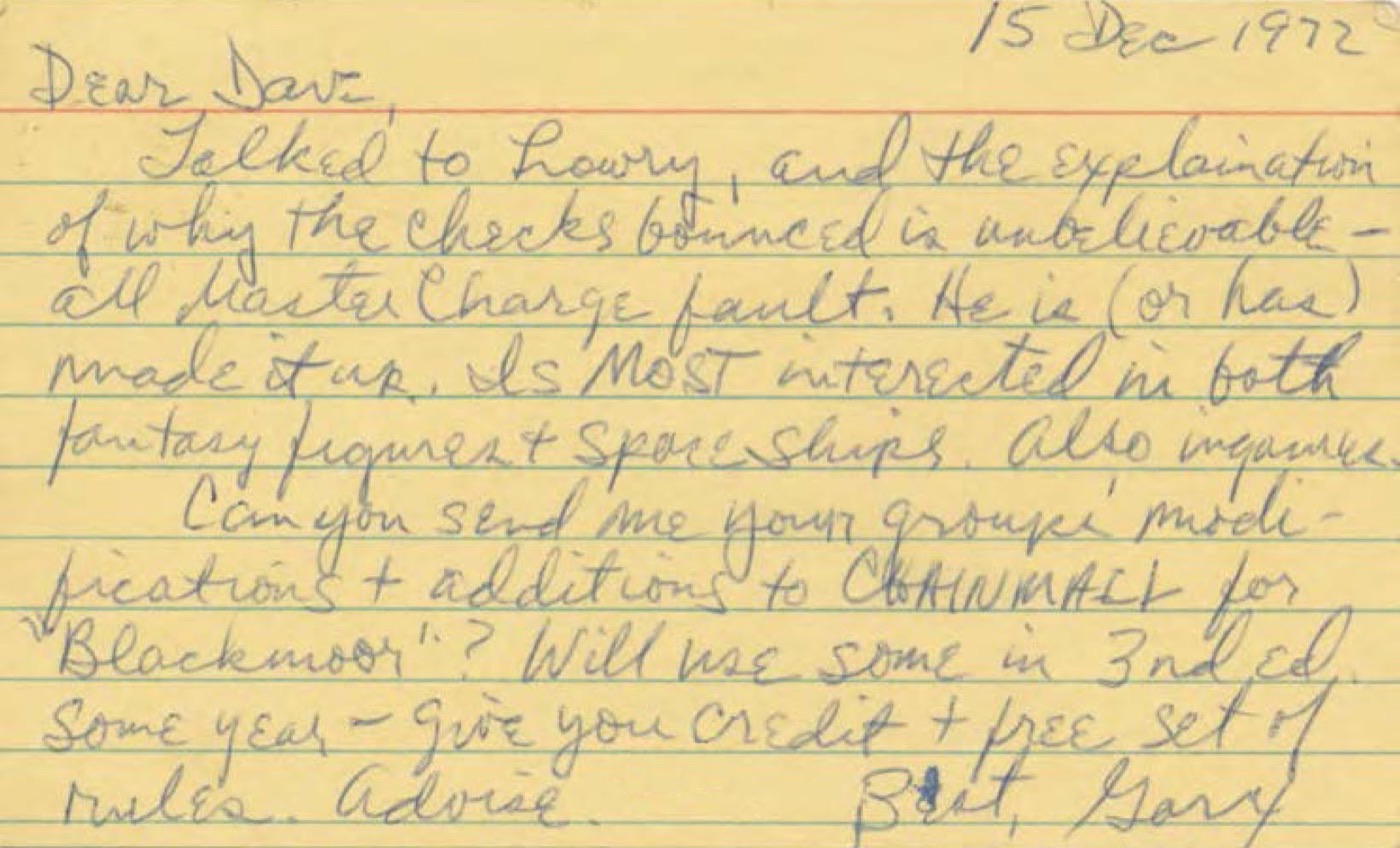
Footnote: In mid December 1972 Gygax was asking Arneson for any modifications and additions to Chainmail for Blackmoor to incorporate into the 3rd edition.
Originally published on Substack on November 17, 2025.